Pages

Monday, October 27, 2014

Recent Read: Witches


Witches: The Absolutely True Tale of Disaster in Salem by Rosalyn Schanzer

Ever wonder what really happened in Salem all those years ago? I realized that my knowledge of it was limited to (1) The Crucible and (2) the offhand comment my high school history teacher made about the possibility they were all high. Rosalyn Schanzer takes us through the blow-by-blow of what we know happened—the fits, the accusations, the hysteria, the biased judges, the tragic executions.

Spoiler alert, but I imagine many of your questions will go unanswered, as mine were. What was fake and what was real? What was honest and what was false? What were the motivations? Schanzer gives an overview of the various theories scholars have come up with to answer these questions, but we don’t really know. Still, this makes for a very interesting read, and helped me distinguish between tales and reality.

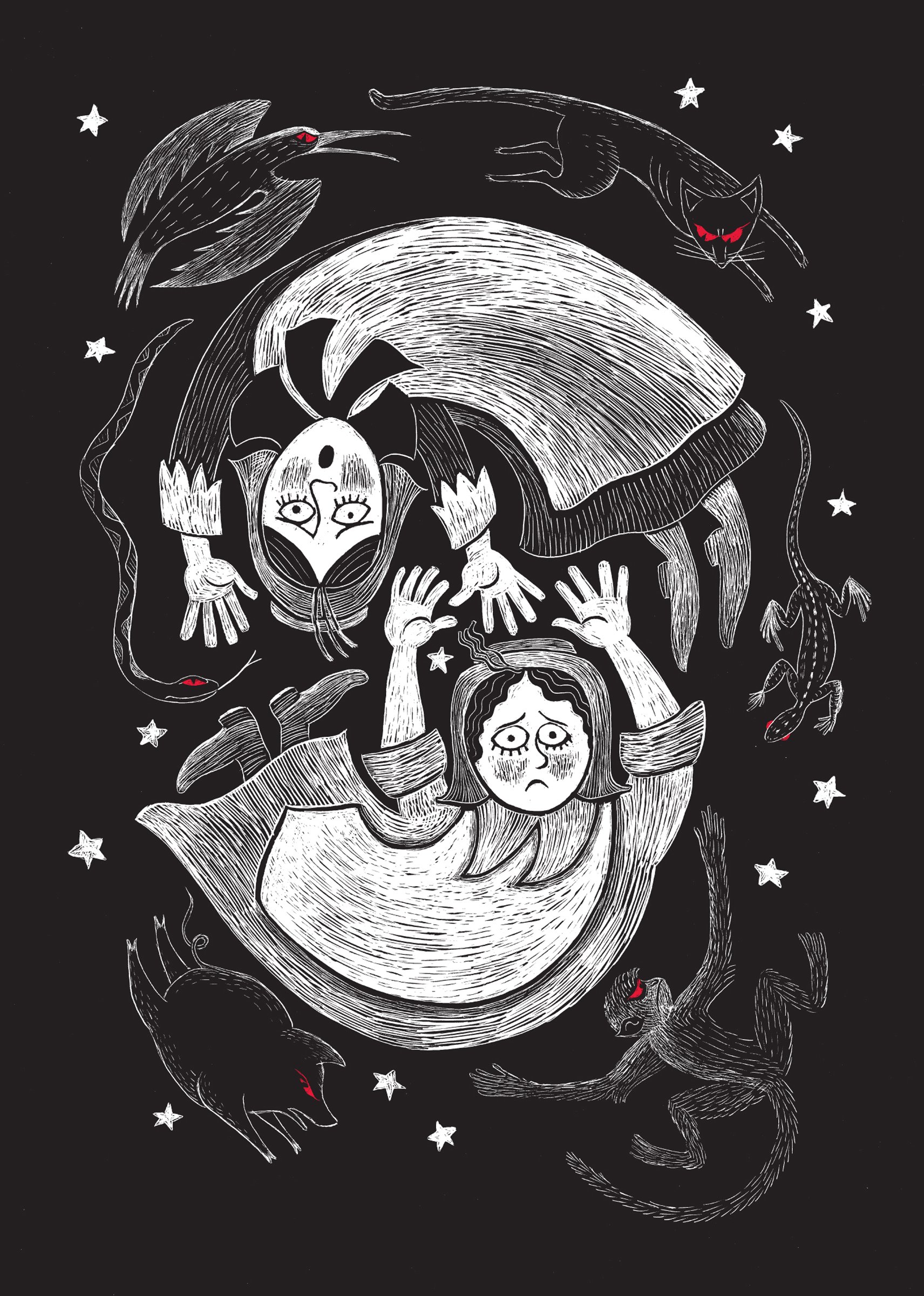
And then there are the illustrations. Fantastic! Dynamic black and white scratch board illustrations, with little red accents add real pizzazz.



Wednesday, October 15, 2014

Recent Read: The Family Romanov

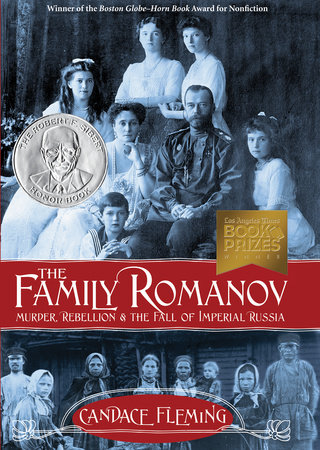
The Family Romanov by Candance Fleming

Tsar Nicholas II: well-intentioned, but ill-prepared and oblivious ruler of 130 million people and 1/3 of the land on Earth, with a family wealth estimated to be worth $45 billion.

Empress Alexandra: slightly reclusive, mystic obsessed, German-born wife to Nicholas.

The Romanov children: four lovely daughters, and one hemophiliac heir, Alexei.

The Russian people: 84% peasants living in crude huts without electricity, chimneys, or real furniture, with barely food enough to eat. 10.5% urban workers, enduring dangerous working conditions and long hours, and making only enough money to rent a small tenement without water, kitchen, or toilet. 

With Alexei’s hidden condition, Nicholas’s passive nature, and Alexandra’s penchant for mysticism, the family was destined for trouble from the beginning. Add to that workers’ discontent, miserable peasants, the toxic monk Rasputin, the rise of communism (and Lenin), World War I, and revolution, and doom seems inevitable.

Author Candace Fleming expertly weaves together many different threads to form a complex, tragic tapestry of Russia and its last royal family. She focuses on the Romanov family, providing us a thorough and colorful portrait of the Romanovs—quirks and all (Alexandra personally hung over 700 icons on the walls of the imperial bedroom).

The story of the Romanovs cannot be divorced from the historical and political events of their time, and so their lives and decisions are always included in the larger context of Russia and its people (and problems). To provide an even richer understanding of the time, Fleming includes first-hand accounts of life in Russia at the time from the viewpoint of individual Russians and the occasional foreign journalist.

As readable as any good novel, this nonfiction book is excellent on all fronts. Fascinating and compelling from cover to cover.

Monday, October 13, 2014

Picture This: Have You Seen My Dragon?

Have You Seen My Dragon? by Steve Light

A boy has lost his dragon and traipses across New York City in search of him.

Along the way, the boy finds many other things: 2 hot dogs ("maybe he got hungry and stopped for a hot dog"), 3 buses ("or perhaps he went downtown on the bus"), 4 sailboats ("it's possible he went for a swim), etc. In every case, the boy is correct. We can see the dragon eating a hot dog and going for a swim, but the boy doesn't see. Drawn in bold pen and ink, each spread is black and white, with the counted objects in bright colors. Meanwhile, the dragon blends right in. The endpages feature a map of where the boy and his dragon have been. Lots of fun, with great illustrations.


Friday, October 10, 2014

Picture This: Queen Victoria's Bathing Machine

Queen Victoria's Bathing Machine by Gloria Whelan, illustrated by Nancy Carpenter

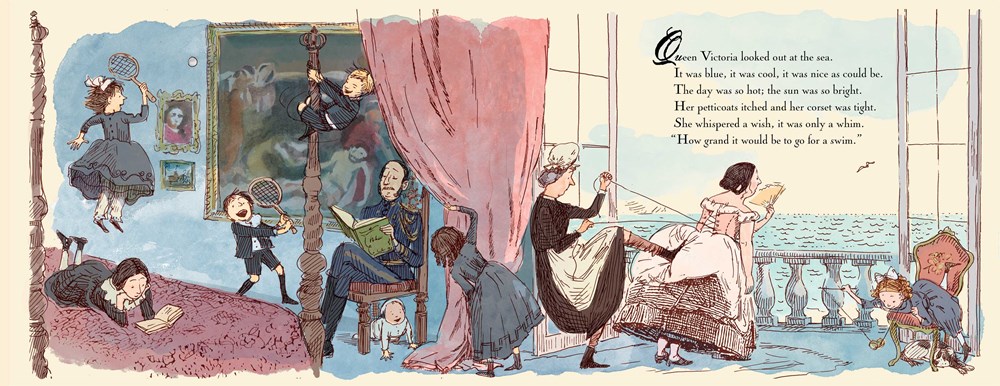
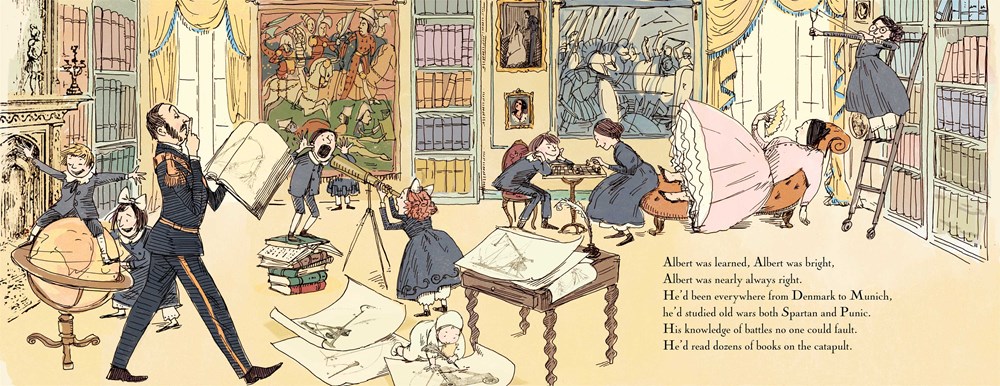
Queen Victoria loves to swim, but can't because it would be scandalous to see more of the queen than her hands and face. Fortunately, her husband comes up with a solution.

Mary Carpenter's illustrations are a bustle of activity, featuring the royal couple's nine children in nearly every spread. But what sets this picture book apart is Whelan's rhythm, rhyme, and diction. Whelan is creative, colorful and funny with her choice of words.


The queen sighed a sigh. "I'll give up the notion.
I'll never be allowed to enter the ocean.
For how can I swim if I wear all my clothes,
my petticoats and dresses, my shoes and my hose?
They'd get drippy and slushy and soggy and sodden,
and down I would sink right to the bottom.
Add to that the true story of Prince Albert's invention of the bathing machine (a dressing room that can be wheeled into the ocean so the queen can go into the water without showing so much as toe to the public during the transition), and you have this this charmer.