Willow Chance is a girl who doesn’t fit in. She’s strange, and she knows it. She has three obsessions: medical conditions, plants, and the number 7. And she’s a legitimate genius. She’s always had difficulty making friends. And it’s when she makes her first friend and things really start looking up that her world falls apart. She comes home to find policemen at her house, saying, “There’s been an accident.”
The writing here is great. Holly Goldberg Sloan's Counting by 7s is heartbreaking, but more than that, it’s uplifting, and funny and heart-warming. It’s a story of loss, but also of belonging and friendship and family and service. Willow is odd, yes, but she’s also thoughtful, kind, and sympathetic. She’s observant, and it’s fun to see the world through her intellectual and rational point of view. A motley crew collects around her. We get to know all of them, and we come to care about each of them (sometimes in spite of them). One of the things I loved about this was how they rally around her, and in caring for her, they improve themselves. They become better people because she was in their lives.
Tuesday, December 31, 2013
Monday, December 30, 2013
Picture This: Journey
Journey by Aaron Becker
A young girl goes to her room when she can't find anyone to play with her. She spots a red crayon on the floor, draws a door on the wall and walks through to discover another world.
I think this book will win the gold next year. This is Becker's first picture book, but it is a wonder. The watercolor and ink illustrations are gorgeous and imaginative and detailed. He has created connections throughout the story in small ways (for instance, did you notice that the boy with the purple crayon that we meet at the end is just outside her door at the beginning?). The full-color pages of cities are impressive, but even his use of white space and muted colors enhances the story. It's a story of imagination, creativity, and friendship. The New York Tiems called it a "masterwork" and I'd have to agree. After a debut this stunning, I'm very much looking forward to what Aaron Becker will create in the future. (see a video of about the process of creating this book here.)
A young girl goes to her room when she can't find anyone to play with her. She spots a red crayon on the floor, draws a door on the wall and walks through to discover another world.
I think this book will win the gold next year. This is Becker's first picture book, but it is a wonder. The watercolor and ink illustrations are gorgeous and imaginative and detailed. He has created connections throughout the story in small ways (for instance, did you notice that the boy with the purple crayon that we meet at the end is just outside her door at the beginning?). The full-color pages of cities are impressive, but even his use of white space and muted colors enhances the story. It's a story of imagination, creativity, and friendship. The New York Tiems called it a "masterwork" and I'd have to agree. After a debut this stunning, I'm very much looking forward to what Aaron Becker will create in the future. (see a video of about the process of creating this book here.)
Saturday, December 14, 2013
Picture This: Count the Monkeys
Count the Monkeys by Mac Barnett, illustrated by Kevin Cornell
Can you count the monkeys?
This is no ordinary counting book. It's interaction at its best. On the title page we get ready to count the monkeys but are interrupted by 1 cobra, who is then chased off by 2 mongooses (or is it mongeese?), who are frightened off by 3 crocodiles, and so on. We start to wonder if we're ever going to see any monkeys! Throughout, Barnett converses with the audience and gives them instructions. "Move your hand in a zig zag whie you turn the page--it will confuse them," he says of the crocodiles. At another point: "Was that your idea? Because it wasn't mine." It's a book where kids will be shouting responses and having a fantastic time laughing and watching what unfolds on every page. And when you think it's all over, you turn the page to reveal a terrific surprise on the endpages.
Can you count the monkeys?
This is no ordinary counting book. It's interaction at its best. On the title page we get ready to count the monkeys but are interrupted by 1 cobra, who is then chased off by 2 mongooses (or is it mongeese?), who are frightened off by 3 crocodiles, and so on. We start to wonder if we're ever going to see any monkeys! Throughout, Barnett converses with the audience and gives them instructions. "Move your hand in a zig zag whie you turn the page--it will confuse them," he says of the crocodiles. At another point: "Was that your idea? Because it wasn't mine." It's a book where kids will be shouting responses and having a fantastic time laughing and watching what unfolds on every page. And when you think it's all over, you turn the page to reveal a terrific surprise on the endpages.
Monday, December 9, 2013
Picture This: The Day the Crayons Quit
The Day the Crayons Quit by Drew Daywalt, illustrated by Oliver Jeffers
Duncan goes to get his crayons one day and finds a stack of letters. He opens them to find notes to him from his crayons. Many of them are dissatisfied! Red Crayon is overworked and needs a rest. Purple Crayon can't stand that so much of his color goes outside the lines. Beige Crayon is unhappy that he's passed over so often. Gray crayon is getting worn out from coloring such big animals, like elephants and rhinos and whales. Every crayon Duncan uses has something to say. Will he figure out a way to please them all?
This book is hilarious. Each color crayon has distinct personality and something unique to complain about. The letters are written in Oliver Jeffers's signature scrawl, and each letter is accompanied by a messy illustration by that particular crayon. Red features a fire truck with Santa on top, surrounded by hearts and apples. One of my personal favorites is gray crayon: "I know you love elephants. And I know that elephants are gray. But that's a LOT of space to color all by myself. And don't get me started on rhinos, hippos and HUMPBACK WHALES." Next to the letter is a page almost entirely filled with gray crayon filling in the exaggeratedly big elephant, hippos and rhino. The text and illustrations are perfectly paired. It's clever, fresh, and creative. And Duncan's solution to his crayon problem? Perfect.
Duncan goes to get his crayons one day and finds a stack of letters. He opens them to find notes to him from his crayons. Many of them are dissatisfied! Red Crayon is overworked and needs a rest. Purple Crayon can't stand that so much of his color goes outside the lines. Beige Crayon is unhappy that he's passed over so often. Gray crayon is getting worn out from coloring such big animals, like elephants and rhinos and whales. Every crayon Duncan uses has something to say. Will he figure out a way to please them all?
This book is hilarious. Each color crayon has distinct personality and something unique to complain about. The letters are written in Oliver Jeffers's signature scrawl, and each letter is accompanied by a messy illustration by that particular crayon. Red features a fire truck with Santa on top, surrounded by hearts and apples. One of my personal favorites is gray crayon: "I know you love elephants. And I know that elephants are gray. But that's a LOT of space to color all by myself. And don't get me started on rhinos, hippos and HUMPBACK WHALES." Next to the letter is a page almost entirely filled with gray crayon filling in the exaggeratedly big elephant, hippos and rhino. The text and illustrations are perfectly paired. It's clever, fresh, and creative. And Duncan's solution to his crayon problem? Perfect.
![]() |
| click to enlarge |
![]() |
| click to enlarge |
Friday, December 6, 2013
Friday, November 29, 2013
Dear Santa...
...for Christmas I would like a pet walrus and a pet wombat.
(I was introduced to the walrus video when one of my fb friends said she needed someone to hug, and another replied posted this in response.)
Monday, November 25, 2013
Picture This: This is the Rope
This is the Rope by Jacqueline Woodson, illustrated by James Ransome
"This is the rope my grandmother found beneath an old tree a long time ago back home in South Carolina." That same rope ties the luggage to the car when the family moves to New York City. It's the rope used by this family from one generation to the next as they build a better life.
Jacqueline Woodson, in lyrical simplicity, tells the story of the Great Migration through one fictional family. Her family was among the 6 million+ African Americans who left the South to find a better life with more opportunities in the North and other more tolerant parts of the country. The story doesn't feel historical so much as personal and nostalgic. Through everyday activities, we look on as the parents move to the city, care for their family, watch as their children grow, go off to college and start families of their own. My favorite spread is the collection of family photos decorating the piano. I love the image of families paired with the text about a father teaching his child how to tie a sailor's knot. It's touching without being sentimental--a hard balance to achieve. Woodson and Ransome succeed in creating that balance throughout. It's lovely.
"This is the rope my grandmother found beneath an old tree a long time ago back home in South Carolina." That same rope ties the luggage to the car when the family moves to New York City. It's the rope used by this family from one generation to the next as they build a better life.
Jacqueline Woodson, in lyrical simplicity, tells the story of the Great Migration through one fictional family. Her family was among the 6 million+ African Americans who left the South to find a better life with more opportunities in the North and other more tolerant parts of the country. The story doesn't feel historical so much as personal and nostalgic. Through everyday activities, we look on as the parents move to the city, care for their family, watch as their children grow, go off to college and start families of their own. My favorite spread is the collection of family photos decorating the piano. I love the image of families paired with the text about a father teaching his child how to tie a sailor's knot. It's touching without being sentimental--a hard balance to achieve. Woodson and Ransome succeed in creating that balance throughout. It's lovely.
Monday, November 18, 2013
"...if there is one truism of successful Y.A., it’s that the book’s
unrelenting emphasis must be on character and event, and not the
brilliance of the author’s viewpoint. For me it was a humbling experience, trying to shed the essential
narcissism of my writer’s project because my teen readers wouldn’t
tolerate it. But on crawling out on the other side, I saw that what Y.A.
novels value above all else is storytelling. It took me even longer to
realize that that needn’t lessen a book’s complexity — it just
prioritizes the reader’s experience. Ultimately, if there’s a refrain I
hear from the many adults turning to Y.A., it’s not that the books are
any simpler. They’re just more pleasurable."
Eliot Schrefer, "Junior Varsity is Where the Work Gets Done"
This is a great article about writing YA lit.
Eliot Schrefer, "Junior Varsity is Where the Work Gets Done"
This is a great article about writing YA lit.
Saturday, November 16, 2013
Picture This: Again!
Again! by Emily Gravett
Little dragon likes to have a bedtime story... again... and again...and again.
Emily Gravett strikes again (no pun intended!) with a funny, unique little gem. One of the great things about this book is that it's two stories that collide. Little Dragon's storybook begins, "Cedric the dragon's a bright angry red. He's never, his whole life, (not once) been to bed." He torments princesses and trolls. But each time Mama Dragon picks up the book to reread it (satisfying her child's requests/demands), the story changes ever so slightly. Cedric apologizes to the trolls, becomes more peaceful, and even decides it's time for bed. As his temper cools, his red color gradually fades to green. Meanwhile, Little Dragon, frustrated with his sleepy mother, starts to turn red. His anger escalates into full scale tantrum when his mother finally succumbs to sleep. He shouts and stomps and shakes and fumes...to disastrous (and funny) results. I love the facial expressions--the sleeping mama dragon reminds me of my aging parents, while the little dragon goes from sweet and imploring to angry and demanding.
So in this book, you have: expressive, appealing illustrations; nice illustrations; a relatable storyline with intertwined themes (a child asking for his favorite story over and over, losing your temper, sleep deprivation's effect on temper); endpages that start and end the story (every single page has some element of the story on it--even the bookflap is part of the story!!!); details, details details (Cedric, the trolls, the princess, and even the dragon in the letter C are always part of the story); humor, good rhyming and rhythm, big time kid appeal. I highly recommend this one.
Little dragon likes to have a bedtime story... again... and again...and again.
Emily Gravett strikes again (no pun intended!) with a funny, unique little gem. One of the great things about this book is that it's two stories that collide. Little Dragon's storybook begins, "Cedric the dragon's a bright angry red. He's never, his whole life, (not once) been to bed." He torments princesses and trolls. But each time Mama Dragon picks up the book to reread it (satisfying her child's requests/demands), the story changes ever so slightly. Cedric apologizes to the trolls, becomes more peaceful, and even decides it's time for bed. As his temper cools, his red color gradually fades to green. Meanwhile, Little Dragon, frustrated with his sleepy mother, starts to turn red. His anger escalates into full scale tantrum when his mother finally succumbs to sleep. He shouts and stomps and shakes and fumes...to disastrous (and funny) results. I love the facial expressions--the sleeping mama dragon reminds me of my aging parents, while the little dragon goes from sweet and imploring to angry and demanding.
So in this book, you have: expressive, appealing illustrations; nice illustrations; a relatable storyline with intertwined themes (a child asking for his favorite story over and over, losing your temper, sleep deprivation's effect on temper); endpages that start and end the story (every single page has some element of the story on it--even the bookflap is part of the story!!!); details, details details (Cedric, the trolls, the princess, and even the dragon in the letter C are always part of the story); humor, good rhyming and rhythm, big time kid appeal. I highly recommend this one.
![]() |
| Things to notice: princess's "I"m not having it" attitude, poor crying trolls, red dragon print sheets, and that adorable eager reading face on the little dragon. click to enlarge |
Tuesday, November 12, 2013
Picture This: Exclamation Mark
Exclamation Mark by Amy Krouse Rosenthal & Tom Lichtenheld
Exclamation Mark doesn't fit in, no matter how hard he tries. He feels depressed and wants to run away, until he meets Question Mark--who accidentally helps him find his voice.
I didn't really think too much about the implications of this book (fitting in vs learning the worth of your uniqueness) until working on this review. Now it seems obvious. In a line of periods, Exclamation Mark most certainly does stand out. And can't change himself so that he doesn't. It's when Question Mark inundates him with questions, that he shouts, STOP! in exasperation. It's at that moment that he realizes what it means to be a question mark instead of a period. He experiments, learns all he can do, and becomes proud of who he is. One of my favorite things about an Amy Krouse Rosenthal book is the puns (remember Chopsticks last year?): "But he just wasn't like everyone else. Period." "It was like he broke free from a life sentence." etc. This is a fun one.
Exclamation Mark doesn't fit in, no matter how hard he tries. He feels depressed and wants to run away, until he meets Question Mark--who accidentally helps him find his voice.
I didn't really think too much about the implications of this book (fitting in vs learning the worth of your uniqueness) until working on this review. Now it seems obvious. In a line of periods, Exclamation Mark most certainly does stand out. And can't change himself so that he doesn't. It's when Question Mark inundates him with questions, that he shouts, STOP! in exasperation. It's at that moment that he realizes what it means to be a question mark instead of a period. He experiments, learns all he can do, and becomes proud of who he is. One of my favorite things about an Amy Krouse Rosenthal book is the puns (remember Chopsticks last year?): "But he just wasn't like everyone else. Period." "It was like he broke free from a life sentence." etc. This is a fun one.
Friday, November 8, 2013
Photographer Spotlight: Sebastião Salgado
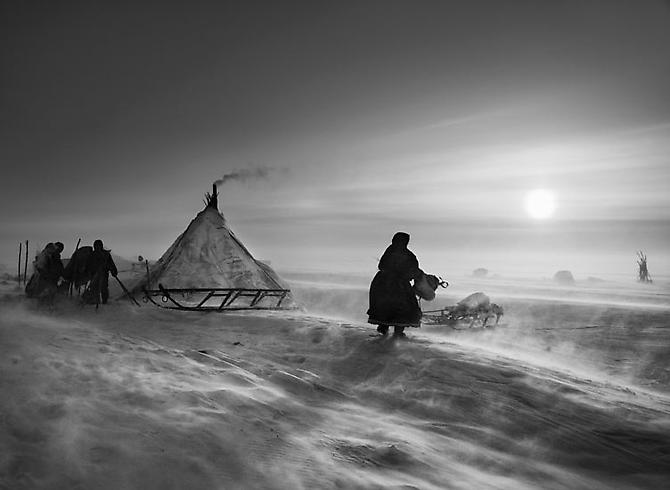
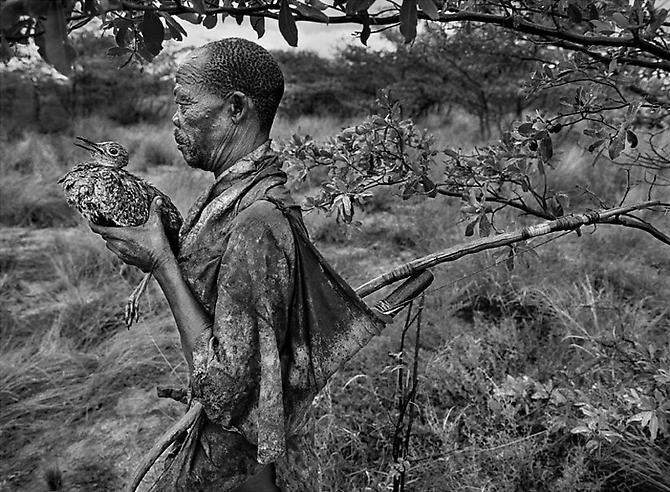
I recently went to see a gallery exhibit of Sebastião Salgado's Genesis. The gallery only included a few of the many photographs in the project, but they were pretty stunning.
Over the space of seven years, Salgado has captured scenes of the world untouched by industrialization. The Genesis project "is about our planet earth, nature and its beauty, and what remains of it today despite the manifold destruction caused by human activity. Genesis is an attempt to portray the beauty and the majesty of regions that are still in a pristine condition, areas where landscapes and wildlife are still unspoiled, places where human communities continue to live according to their ancient culture and traditions.
Genesis is about seeing and marvelling, about understanding the necessity for the protection of all this; and finally it is about inspiring action for this preservation."
I saw and I marvelled.
I loved the photos of the Nenets, to see more go here.
These are all photos I was able to see in person at the exhibit, but there are so many more. See a bunch of them on his website. He's also given a popular TED talk (Liz, I think you'll like this).
| Volcanoes in Kamchatka, Russia. Photo by Sebatiao Salgado |
I saw and I marvelled.
| Easter part of the Brooks Range, Arctic National Wildlife Refuge, Alaska, USA by Sebatiao Salgado. |
| Iceberg between the Paulet Islands and the South Shetland Islands, Antarctica, 2005 by Sebatiao Salgado. |
| Eastern part of the Brooks Range, Arctic National Wildlife Refuge, 2009. By Sebatiao Salgado. |
| Marine Iguana, Rabida Island, Galapagos [iguana claws], 2004 by Sebatiao Salgado |
| Nenets nomads (windstorm), Siberia, Russia, 2011 by Sebatiao Salgado. |
| Nenets nomads (windstorm at camp), North of the Ob river, Siberia, Russia, 2011 by Sebatiao Salgado |
| Bushman carrying bird, Botswana, 2008 by Sebatiao Salgado |
Wednesday, November 6, 2013
Miranda!
"I made this foolish mistake of going jogging. Is this something you ever do? It's wrong. No one should run unless professionally or as a child. That should be it."
-Miranda Hart
(who plays Chummy on 'Call the Midwife')
Miranda Hart isn't just Chummy, she's a comedian and the star of her own sitcom, called 'Miranda.'
Watch it on Hulu! She also has a book called Is It Just Me? (which I hear is best in audiobook format)
-Miranda Hart
(who plays Chummy on 'Call the Midwife')
Miranda Hart isn't just Chummy, she's a comedian and the star of her own sitcom, called 'Miranda.'
Watch it on Hulu! She also has a book called Is It Just Me? (which I hear is best in audiobook format)
Tuesday, November 5, 2013
Picture This: The Mighty Lalouche
The Mighty Lalouche by Matthew Olshan, illustrated by Sophie Blackall
In 1800s Paris, Lalouche is a postman who lives in a small view-less apartment with his finch, Genevieve. He's small and bony, but nimble, fast, and strong. Much to his chagrin, the post office fires Lalouche (because they're going to use electric autocars to deliver the mail). He doesn't know what to do until he sees an ad for boxing. Will Lalouche's speed, nimbleness, and strength be enough for him to win boxing matches against big, fearsome opponents?
I loved this book. The illustrations are a standout, but the writing is good, too. Matthew Olshan has created a lovable character--an underdog who wins, but is really just a simple postman at heart. In one fight, Olshan alludes to previous postal motifs (he was "tall as a spiral staircase, as wide as a wall of cubbies"), communicating Lalouche's love for the mail and tying two different parts of the story together in a humorous and clever way.
Sophie Blackall's illustrations "were made with Chinese ink and watercolor on paper" that were then "cut out, arranged in layers, and photographed." They're fabulous. In the author's note, Olshan includes one of the photos of old French boxers that visibly inspired the illustrations. The characters reminded me of old-style paper dolls, and the backgrounds, of dioramas. Despite the static nature of paper dolls and cutouts, the fight sequences are action- and humor-packed. Once again, much of the delightfulness of the illustrations is in the details. I loved the scenes of Paris--a curving cobblestone street with crates of vegetables, the Sacre Coeur in the background, a row of baguettes in a window, laundry hanging. Lalouche's apartment is lovely and charming, with a tree and landscape painted on the wall, a green printed armchair (love Olshan's prints patterns throughout the book), red slippers on his feet, and a portrait of Genevieve on the wall. I smiled when I saw "defense d'afficher" painted on the wall behind the electric car. Sometimes Olshan lines an image with a hand-made border. Olshan's work here is unique and truly excellent.
All around, this is a highlight of the year.
In 1800s Paris, Lalouche is a postman who lives in a small view-less apartment with his finch, Genevieve. He's small and bony, but nimble, fast, and strong. Much to his chagrin, the post office fires Lalouche (because they're going to use electric autocars to deliver the mail). He doesn't know what to do until he sees an ad for boxing. Will Lalouche's speed, nimbleness, and strength be enough for him to win boxing matches against big, fearsome opponents?
I loved this book. The illustrations are a standout, but the writing is good, too. Matthew Olshan has created a lovable character--an underdog who wins, but is really just a simple postman at heart. In one fight, Olshan alludes to previous postal motifs (he was "tall as a spiral staircase, as wide as a wall of cubbies"), communicating Lalouche's love for the mail and tying two different parts of the story together in a humorous and clever way.
Sophie Blackall's illustrations "were made with Chinese ink and watercolor on paper" that were then "cut out, arranged in layers, and photographed." They're fabulous. In the author's note, Olshan includes one of the photos of old French boxers that visibly inspired the illustrations. The characters reminded me of old-style paper dolls, and the backgrounds, of dioramas. Despite the static nature of paper dolls and cutouts, the fight sequences are action- and humor-packed. Once again, much of the delightfulness of the illustrations is in the details. I loved the scenes of Paris--a curving cobblestone street with crates of vegetables, the Sacre Coeur in the background, a row of baguettes in a window, laundry hanging. Lalouche's apartment is lovely and charming, with a tree and landscape painted on the wall, a green printed armchair (love Olshan's prints patterns throughout the book), red slippers on his feet, and a portrait of Genevieve on the wall. I smiled when I saw "defense d'afficher" painted on the wall behind the electric car. Sometimes Olshan lines an image with a hand-made border. Olshan's work here is unique and truly excellent.
All around, this is a highlight of the year.
Thursday, October 31, 2013
Recent Read: The Coldest Girl in Coldtown
Tana wakes up in the bathroom of a friend's house after a high school party. She emerges to find a massacre of all of her classmates and friends, their blood drained by vampires that are nowhere in sight. The only one still alive is her sleazy ex-boyfriend who's been bitten and a slight vampire chained up on the floor. She narrowly escapes the bloated vampires responsible with her ex and chained vampire in tow. Unsure if she herself has been infected (when bitten, a victim is infected, but only after the victim drinks human blood will he turn into a vampire), she makes her way to the nearest coldtown, a quarantined city for vampires. Tana has a plan, but the risks are high, and she may never be able to return to the life she knew.
Holly Black's The Coldest Girl in Coldtown is no warm and fuzzy tale of vegetarian vampires. The danger is palpable in this fast-paced and grisly (in the best possible way) story. Tana is a clever and appealing heroine--someone who sees the monstrosity of vampires for what it is, as opposed to others who idealize and seek after the glamorous lifestyle they've seen on TV. It's this aspect of the story--the eerily familiar way the teens fantasize about another life and create communities through social media to explore, document and share that fantasy (and reality)--that gave me chills and brought some unexpected depth. In the saturated genre of young adult vampire novels, Holly Black has written something that feels fresh. It's an interesting mix of supernatural, horror, and even a bit of dystopia, and it's wholly enjoyable.
Happy Halloween
Holly Black's The Coldest Girl in Coldtown is no warm and fuzzy tale of vegetarian vampires. The danger is palpable in this fast-paced and grisly (in the best possible way) story. Tana is a clever and appealing heroine--someone who sees the monstrosity of vampires for what it is, as opposed to others who idealize and seek after the glamorous lifestyle they've seen on TV. It's this aspect of the story--the eerily familiar way the teens fantasize about another life and create communities through social media to explore, document and share that fantasy (and reality)--that gave me chills and brought some unexpected depth. In the saturated genre of young adult vampire novels, Holly Black has written something that feels fresh. It's an interesting mix of supernatural, horror, and even a bit of dystopia, and it's wholly enjoyable.
Happy Halloween
Tuesday, October 29, 2013
Ender on camera
I spent last night at the premiere of Ender's Game at Grauman's Chinese Theatre! It was such a fun experience. I saw Asa (who is so tall in person), Harrison, and a handful of (until now) unknown kids. I'm not going to say much about the movie because I don't want to influence anyone's opinion. It was an interesting experience having finished the book just a few days before seeing the movie. It made me realize just how difficult a project it would be to adapt Ender to the screen.
I will mention two things. 1. Remember this? The kids look like kids (not 6-11-year-old kids, but they look young). I think we're so accustomed to seeing 25-year-olds play teenagers, that when you see actual teenagers, they do look young. So it didn't bother me like I thought it might. 2. The effects are impressive. It looks fantastic.
Be sure to talk to me when you've seen it and formed your own opinions.
"I believe and believe that a good movie can be made of Ender’s Game, but it won’t be the book. It won’t be identical to the book. So if you go there expecting that please don’t be angry that it’s not just like the book. It can’t be. I don’t want it to be. You don’t want it to be, ok? You want it to be a good movie which the book would not have been. So we’ll all find out whether they’re successful or not, but I know everyone involved in this movie is doing their very best they can to do this."
"If you’d like to see some of the much more filmable works from me, go to ‘Ender’s Game’! Go often! Bring friends! Because if ‘Ender’s Game’ does not do well, you know how Hollywood works [...] They’ll say Orson Scott Card books don’t work on film. [...] Do us a favor, go to the movie even if you’re going to throw fruit! Just go! Pay your admission, don’t sneak in. I really have high hopes for this to be a good film. I think you’ll like it, so we’ll find out. You’ll let me know."
-Orson Scott Card, at the Los Angeles Times Festival of Books (btw, this whole interview/panel is really interesting)
Go see it!
I will mention two things. 1. Remember this? The kids look like kids (not 6-11-year-old kids, but they look young). I think we're so accustomed to seeing 25-year-olds play teenagers, that when you see actual teenagers, they do look young. So it didn't bother me like I thought it might. 2. The effects are impressive. It looks fantastic.
Be sure to talk to me when you've seen it and formed your own opinions.
"I believe and believe that a good movie can be made of Ender’s Game, but it won’t be the book. It won’t be identical to the book. So if you go there expecting that please don’t be angry that it’s not just like the book. It can’t be. I don’t want it to be. You don’t want it to be, ok? You want it to be a good movie which the book would not have been. So we’ll all find out whether they’re successful or not, but I know everyone involved in this movie is doing their very best they can to do this."
"If you’d like to see some of the much more filmable works from me, go to ‘Ender’s Game’! Go often! Bring friends! Because if ‘Ender’s Game’ does not do well, you know how Hollywood works [...] They’ll say Orson Scott Card books don’t work on film. [...] Do us a favor, go to the movie even if you’re going to throw fruit! Just go! Pay your admission, don’t sneak in. I really have high hopes for this to be a good film. I think you’ll like it, so we’ll find out. You’ll let me know."
-Orson Scott Card, at the Los Angeles Times Festival of Books (btw, this whole interview/panel is really interesting)
Go see it!
Sunday, October 27, 2013
Laura at Immanuel Presbyterian
Just this past Monday I saw Laura Marling live at Immanuel Presbyterian. I got there early and had a seat in the second row. On my way to get in line, a blond girl exited the side of the church. I thought, hey she almost looks like--it's Laura! I walked right past her--about a foot away. I didn't say anything because I didn't know what I would say. So I smiled, satisfied, knowing that I had seen her off stage.
When it's a concert like this, with no band, my favorite part becomes the new songs. One in particular was quite beautiful. And someone--bless them--recorded it. Make sure you listen to the lyrics.
begging the dawn not to come.
Oh how I don't want to leave you
so much I can't hardly bear.
I have some things I must tend to.
Would you stay as you are lying there?
You are too much a man
to let go.
I am too much a woman
not to know.
Kissing the rain off your shoulders
answering questions with stares
holding my chest like I'm a wild horse
running my hands through your hair.
The sun kicks the moon off the mountain.
That is my cue to leave
The long tears of women are silent
so they don't wake those who sleep
You are too much a man to let go.
I am too much a woman not to know
I'm coming to get you
hoping that you haven't changed your mind, baby
Be mine.
So intimate. It's enough to make me wonder if she has a new man in her life. But it could just as easily be a new book with her. I love that line "answering questions with stares." The other new song she played is here.
Picture This: Mary Wrightly, So Politely
Mary Wrightly, So Politely by Shirin Yim Bridges, illustrated by Maria Monescillo
Mary Wrightly is very polite. She always says please and thank you. She always speaks in a soft voice. She decides she'd like to get her baby brother a birthday present at the toy store, but every time she reaches for the right toy, someone takes it before she can get there. Will she speak up enough to get her baby brother a birthday present?
I really, really liked this one. Mary's voice is "so small and soft, she often had to say things more than once." When someone steps on her toe, she apologizes for getting in the way. She's good-hearted and sweet, and all she wants to do is get a good gift for her baby brother! It's when she finds the perfect gift, and someone picks it up and starts to walk away that she is forced to speak up. Her reward for speaking up isn't so much the stuffed elephant as the exclamation from her not-quite-speaking-in-coherent-language-brother's exclamation of pleasure. It's a sweet and funny story, told and illustrated well. Monescillo's pastel-on-cardboard illustrations are soft and saturated with color. Love it.
Mary Wrightly is very polite. She always says please and thank you. She always speaks in a soft voice. She decides she'd like to get her baby brother a birthday present at the toy store, but every time she reaches for the right toy, someone takes it before she can get there. Will she speak up enough to get her baby brother a birthday present?
I really, really liked this one. Mary's voice is "so small and soft, she often had to say things more than once." When someone steps on her toe, she apologizes for getting in the way. She's good-hearted and sweet, and all she wants to do is get a good gift for her baby brother! It's when she finds the perfect gift, and someone picks it up and starts to walk away that she is forced to speak up. Her reward for speaking up isn't so much the stuffed elephant as the exclamation from her not-quite-speaking-in-coherent-language-brother's exclamation of pleasure. It's a sweet and funny story, told and illustrated well. Monescillo's pastel-on-cardboard illustrations are soft and saturated with color. Love it.
Wednesday, October 23, 2013
Photographer Spotlight: Jodi Cobb
I learned about Jodi Cobb through a brochure about upcoming events at the Broad Stage. Next to her name was this fabulous photo of a bedecked Miss Hawaii:
I found that this was part of a project she undertook to photograph beauty and perceptions of beauty around the world. She went to 10 countries on 6 continents "to explore cultural notions of beauty and attraction." Here are a few others from the same series:
Aren't those something?
She also did a book on Geishas.
See more of her work here, here, and here.
| Miss Hawaii, 1998, by Jodi Cobb |
| Huli Wigman, Papua New Guinea, by Jodi Cobb |
| Louisiana Swoop, Georgia, 1998 by Jodi Cobb |
| Mud Boys, Papua New Guinea, by Jodi Cobb |
| Bound Foot, China, 1998 by Jodi Cobb |
She also did a book on Geishas.
| Geisha Lips, Kyoto, 1993 by Jodi Cobb |
| The Youngest Geisha, The Oldest Geisha, by Jodi Cobb |
| Backstage Horoscopes, Kyoto, 1993 by Jodi Cobb |
See more of her work here, here, and here.
Monday, October 14, 2013
Picture This: Have You Seen My New Blue Socks?
Have You Seen My New Blue Socks? by Eve Bunting, illustrated by Sergio Ruzzier
I have lost my new blue socks.
Did I put them in my box?
I know I put them somewhere near.
How could they simply disapper?
I love a good rhyming book. And what's even better--duck searches everywhere for his socks, and where does he find them? (spoiler alert) On his feet!
I have lost my new blue socks.
Did I put them in my box?
I know I put them somewhere near.
How could they simply disapper?
I love a good rhyming book. And what's even better--duck searches everywhere for his socks, and where does he find them? (spoiler alert) On his feet!
| I love that ox is in the middle of painting. |
Saturday, October 5, 2013
Picture This: Flora and the Flamingo
Flora and the Flamingo by Molly Idle
In this wordless picture book, Flora and the flamingo navigate friendship through dance.
I don't know how else to describe this unique picture book. We are introduced to Flora through her right, finned foot. Once fully in the frame, we see that Flora is not only outfitted with fins, but with a swimsuit and a floral swim cap. Flora watches and copies her friend flamingo, but plays dumb when flamingo takes a peek. When flamingo finally catches Flora, she gets angry at her, leaving Flora hurt. Seeing this, flamingo invites Flora to join her. Together they dance a lovely ballet.
The book contains flaps that can be folded down to reveal movement, facial expressions and gestures (to be honest I don't know that i loved this feature or thought it entirely necessary). Idle, not surprisingly, got her start in animation. Her understanding of movement and facial expressions is apparent on every page. The dancing is elegant, while the facial expression vary from funny to serene. It truly is a lovely dance they perform together, and the bliss they feel in dancing is visible.
In this wordless picture book, Flora and the flamingo navigate friendship through dance.
I don't know how else to describe this unique picture book. We are introduced to Flora through her right, finned foot. Once fully in the frame, we see that Flora is not only outfitted with fins, but with a swimsuit and a floral swim cap. Flora watches and copies her friend flamingo, but plays dumb when flamingo takes a peek. When flamingo finally catches Flora, she gets angry at her, leaving Flora hurt. Seeing this, flamingo invites Flora to join her. Together they dance a lovely ballet.
The book contains flaps that can be folded down to reveal movement, facial expressions and gestures (to be honest I don't know that i loved this feature or thought it entirely necessary). Idle, not surprisingly, got her start in animation. Her understanding of movement and facial expressions is apparent on every page. The dancing is elegant, while the facial expression vary from funny to serene. It truly is a lovely dance they perform together, and the bliss they feel in dancing is visible.
Tuesday, October 1, 2013
Arctic Monkeys, you rock my world
I saw them in concert last night. This is the second or third time I've seen them live and it was the best yet. They even played my favorite song! (well, there's more than one, but this one for sure) Alex wore a glittery copper blazer, with his 50's greaser hair, skinny black pants, pinky ring, and what were probably Beatle boots. He spent the evening moving to the music with twisting feet and jutting hips. When I think of trying to describe how good he looked, how sexy he is, I mostly come up with phrases involving expletives, so I'm not gonna try.
Monday, September 30, 2013
Picture This: Nelly May Has Her Say
Nelly May Has Her Say by Cynthia DeFelice, illustrated by Henry Cole
Nelly May Nimble lives in a tiny cottage with her twelve siblings until she gets a job as a housekeeper and cook for Lord Ignasius Pinkwinkle. She moves in to learn that Lord Pinkwinkle has special names for just about everything, and he expects her to use his names for things. He himself is "Most Excellent of All Masters," while his bed is his "restful slumberific," his boots are his "stompinwhackers," his dog is his fur-faced fluffenbarker," his dog's tail a "wigger-wagger." It's exhausting, and she must decide whether it's worth it to continue working as his fuzzy-dust-and-fooder.
Based on Joseph Jacobs's "Master of All Masters," DeFelice's version maintains the folktale quality, but with updated, significantly more complicated (and funnier) names for things. The word-play is a lot of fun. Cole's colorful illustrations bring movement and humor to the pages. All the special names build to a humorous climax. This is a lot of fun, and kids will love it. (though it may not be something you'd want read over and over, because it is a mouthful.)
Nelly May Nimble lives in a tiny cottage with her twelve siblings until she gets a job as a housekeeper and cook for Lord Ignasius Pinkwinkle. She moves in to learn that Lord Pinkwinkle has special names for just about everything, and he expects her to use his names for things. He himself is "Most Excellent of All Masters," while his bed is his "restful slumberific," his boots are his "stompinwhackers," his dog is his fur-faced fluffenbarker," his dog's tail a "wigger-wagger." It's exhausting, and she must decide whether it's worth it to continue working as his fuzzy-dust-and-fooder.
Based on Joseph Jacobs's "Master of All Masters," DeFelice's version maintains the folktale quality, but with updated, significantly more complicated (and funnier) names for things. The word-play is a lot of fun. Cole's colorful illustrations bring movement and humor to the pages. All the special names build to a humorous climax. This is a lot of fun, and kids will love it. (though it may not be something you'd want read over and over, because it is a mouthful.)
Subscribe to:
Posts (Atom)