Georgia in Hawaii by Amy Novesky, illustrated by Yuyi Morales
In 1939 the Hawaiian Pineapple Company invited Georgia O'Keefe to come visit Hawaii. The company hoped that she would paint pineapples, but when they refused to let her live close to the fields and the workers, sending her baskets of picked pineapples instead, Georgia became frustrated. She did not want to follow the orders of the company. So instead she painted what she wanted to paint when she wanted to paint: waterfalls, fishhooks, the ocean, plumerias, etc.
The story is told simply, with lush, vibrant illustrations by Yuyi Morales bringing it all to life. Morales successfully evokes O'Keefe while maintaining the illustrations as her own. Even the endpages are lovely, with illustrations of Hawaiian flowers. I wish there were images of the actual O'Keefe tableaus in the notes at the end (especially of the pineapple). A beautiful book. get a taste here.
Tuesday, July 24, 2012
Thursday, July 19, 2012
Yesterday's Sky
Yesterday, I saw things outside start to turn red, so I rushed outside in my lounge-around-the-house clothes (not something I want to be seen in) and some slippers and started running down the street to see if I could get a better shot (hopefully without power lines--you can see how well that worked out). It faded more with every step I took, and as I reached the big street where I thought I could get a clear shot it had faded into the horizon and big drops of rain started to fall. So fleeting.
And my favorite:
And my favorite:
Monday, July 16, 2012
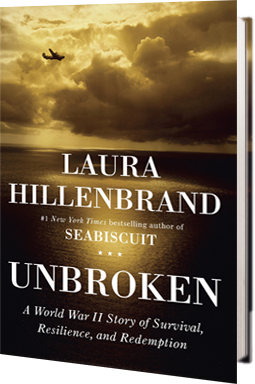
Laura Hillenbrand's Unbroken
I just finished Unbroken by Laura Hillenbrand. Where do I even begin?
As if we needed any more proof of Laura Hillenbrand's brilliance (if you haven't read Seabiscuit, I highly recommend it), here is her second book, about a childhood trouble maker, turned Olympic runner, turned World War II bomber, turned POW in the Pacific. It's an incredible story. It's been on the NY Times Bestseller list for close to 90 weeks--and with good reason.
Hillenbrand is a very skilled writer. She's a storyteller, and she knows how to spot the kind of details that will not only bring people and stories to life, but also present a bigger picture. She weaves together narrative, events, facts and background info, with heart-pounding scenes of suspense. At one point, I remember my dad and I were sitting at the table reading--he was reading Hunger Games, I was reading Unbroken--and as I breathlessly reached the end of the chapter, I thought, "this is as harrowing and exciting as Hunger Games, except it's real!" I dare you to read the preface, a short 2 pages, and not find yourself hooked.
We meet Louis Zamperini as a clever, thieving child, introduced to running by his brother to keep him out of trouble. It's not long before he's winning all his races, going to USC on scholarship, and becoming one of the most beloved runners of his time. He went to the Olympics in Berlin, rubbed shoulders with Jesse Owens, and stayed in the lovely Olympic Village that would become army barracks. His determination, resourcefulness, and good nature would serve him well as he entered the war.
I learned so much about World War II that I hadn't known. Hillenbrand shares many untold stories of the war--especially pertaining to war in the Pacific. The Pacific presented different challenges. With all that wide open ocean, equipment and planes had to be different, battle strategies were different, survival was different (soldiers had to face shark infested waters and the possibility of never being found if they went down). And then there was what it meant to be at war with Japan.
Often we focus on Europe, the Nazis, and the Holocaust. What happened to the Jews (and many, many others) was atrocious. But there were lots of atrocious things happening in the Pacific as well. The Japanese held similar values to the Nazis--only the Japanese thought they were the supreme race. This sort of attitude made it easy for them to invade other Asian countries (Korea, Indonesia, China, Philippines, etc) and force their civilians into slave labor (and sex slavery). Japan actually set up a puppet state in Manchuria in 1931, and invaded the rest of China in 1937, two years before Germany invaded Poland.
Honor and shame were paramount in Japanese culture. The Japanese military believed it was better to die than suffer the unbearable shame of being captured, a philosophy which informed many aspects of the war in the Pacific. It affected the way they fought the war (kamikazes, for example), their attitude toward captured POWs, their eventual surrender, and their policies (like "kill-all" orders that were to be carried out before capture). I read in horror of the cruelty POWs suffered at the hands of some guards. 37% of (recorded) American POWs died in Japan, as opposed to 1% who died in Germany.
And then the war ended, and the POWs got to go home, but tragically, that wasn't the end. Their torture followed them home in the form of PTSD's dreams and flashbacks. Many suffered lasting physical effects, and others were consumed by hatred, resentment, or desire for revenge. And yet, men were able to move on and build happy, successful lives for themselves and their families. It's truly inspiring.
I hope I haven't spoiled too much. Some of what's in this book struck me so hard. There's so much I'm bursting to share, but I tried to keep it brief in the hope that you'll read about it yourselves and have your own moments of of shock, understanding, inspiration, etc. I've tried to speak in generalities, so as not to spoil the main stories of the book. Louie Zamperini is one of a kind. As it says on the cover, his is a story survival (against all odds, I might add), resilience, redemption. I laughed, I cried, I stared in disbelief. Just wait until you get to the end. I cannot recommend this book enough.
I've included images of that preface in the hopes of hooking you, too. (you can also find these pages in Amazon's "Look Inside!" feature)
As if we needed any more proof of Laura Hillenbrand's brilliance (if you haven't read Seabiscuit, I highly recommend it), here is her second book, about a childhood trouble maker, turned Olympic runner, turned World War II bomber, turned POW in the Pacific. It's an incredible story. It's been on the NY Times Bestseller list for close to 90 weeks--and with good reason.
Hillenbrand is a very skilled writer. She's a storyteller, and she knows how to spot the kind of details that will not only bring people and stories to life, but also present a bigger picture. She weaves together narrative, events, facts and background info, with heart-pounding scenes of suspense. At one point, I remember my dad and I were sitting at the table reading--he was reading Hunger Games, I was reading Unbroken--and as I breathlessly reached the end of the chapter, I thought, "this is as harrowing and exciting as Hunger Games, except it's real!" I dare you to read the preface, a short 2 pages, and not find yourself hooked.
We meet Louis Zamperini as a clever, thieving child, introduced to running by his brother to keep him out of trouble. It's not long before he's winning all his races, going to USC on scholarship, and becoming one of the most beloved runners of his time. He went to the Olympics in Berlin, rubbed shoulders with Jesse Owens, and stayed in the lovely Olympic Village that would become army barracks. His determination, resourcefulness, and good nature would serve him well as he entered the war.
I learned so much about World War II that I hadn't known. Hillenbrand shares many untold stories of the war--especially pertaining to war in the Pacific. The Pacific presented different challenges. With all that wide open ocean, equipment and planes had to be different, battle strategies were different, survival was different (soldiers had to face shark infested waters and the possibility of never being found if they went down). And then there was what it meant to be at war with Japan.
Often we focus on Europe, the Nazis, and the Holocaust. What happened to the Jews (and many, many others) was atrocious. But there were lots of atrocious things happening in the Pacific as well. The Japanese held similar values to the Nazis--only the Japanese thought they were the supreme race. This sort of attitude made it easy for them to invade other Asian countries (Korea, Indonesia, China, Philippines, etc) and force their civilians into slave labor (and sex slavery). Japan actually set up a puppet state in Manchuria in 1931, and invaded the rest of China in 1937, two years before Germany invaded Poland.
Honor and shame were paramount in Japanese culture. The Japanese military believed it was better to die than suffer the unbearable shame of being captured, a philosophy which informed many aspects of the war in the Pacific. It affected the way they fought the war (kamikazes, for example), their attitude toward captured POWs, their eventual surrender, and their policies (like "kill-all" orders that were to be carried out before capture). I read in horror of the cruelty POWs suffered at the hands of some guards. 37% of (recorded) American POWs died in Japan, as opposed to 1% who died in Germany.
And then the war ended, and the POWs got to go home, but tragically, that wasn't the end. Their torture followed them home in the form of PTSD's dreams and flashbacks. Many suffered lasting physical effects, and others were consumed by hatred, resentment, or desire for revenge. And yet, men were able to move on and build happy, successful lives for themselves and their families. It's truly inspiring.
I hope I haven't spoiled too much. Some of what's in this book struck me so hard. There's so much I'm bursting to share, but I tried to keep it brief in the hope that you'll read about it yourselves and have your own moments of of shock, understanding, inspiration, etc. I've tried to speak in generalities, so as not to spoil the main stories of the book. Louie Zamperini is one of a kind. As it says on the cover, his is a story survival (against all odds, I might add), resilience, redemption. I laughed, I cried, I stared in disbelief. Just wait until you get to the end. I cannot recommend this book enough.
I've included images of that preface in the hopes of hooking you, too. (you can also find these pages in Amazon's "Look Inside!" feature)
![]() |
| enlarge |
![]() |
| enlarge |
Wednesday, July 11, 2012
Picture This: Chloe and the Lion
Chloe and the Lion by Mac Barnett, illustrated by Adam Rex
From the beginning we know that this is not your average picture book, as the author introduces himself and the illustrator before introducing the main character, Chloe. Chloe is walking through he forest at night when a huge lion leaps out from behind a tree. Or, well, it says lion, but what we actually see is a dragon. This is when Mac interrupts to ask why Adam drew a dragon instead of a lion. What follows is an argument about the story at hand, and really, whether the author or the illustrator is more important. Through it all, the illustrator is fired and eaten by a lion (all at the hands of our dear author), and Mac has to figure out how to complete the story.
Creative, very funny, and a great look at the roles of authors and illustrators. It must have been quite an undertaking, with clay figures with fabric clothing for the authors, a stage set made of painted balsa wood, and drawn characters, all combined using photography and Photoshop. The best part of this story is author and illustrator making a picture book part. There are some nice themes of teamwork and the contributions that every person makes. Alas, it just feels too long. It's like a movie where you find yourself wondering, what time is it? how long has this been going? Once Chloe's fairy tale gets going again, I was ready for the conclusion but instead I got too much fairy tale, one joke that kids will not understand, one joke told one time too many, and finally, two endings. And I'm willing to suspend disbelief, but some might question how the story's characters (Chloe, for example) can be autonomous. The book does point out that the writer controls all that the characters do. Anyway, I don't want to detract too much from it. It's here because it's still good, and it's worth a read because of the sheer creativity and humor of it.
And watch the trailer! It gives you a feel for the book and it's funny on its own.
From the beginning we know that this is not your average picture book, as the author introduces himself and the illustrator before introducing the main character, Chloe. Chloe is walking through he forest at night when a huge lion leaps out from behind a tree. Or, well, it says lion, but what we actually see is a dragon. This is when Mac interrupts to ask why Adam drew a dragon instead of a lion. What follows is an argument about the story at hand, and really, whether the author or the illustrator is more important. Through it all, the illustrator is fired and eaten by a lion (all at the hands of our dear author), and Mac has to figure out how to complete the story.
Creative, very funny, and a great look at the roles of authors and illustrators. It must have been quite an undertaking, with clay figures with fabric clothing for the authors, a stage set made of painted balsa wood, and drawn characters, all combined using photography and Photoshop. The best part of this story is author and illustrator making a picture book part. There are some nice themes of teamwork and the contributions that every person makes. Alas, it just feels too long. It's like a movie where you find yourself wondering, what time is it? how long has this been going? Once Chloe's fairy tale gets going again, I was ready for the conclusion but instead I got too much fairy tale, one joke that kids will not understand, one joke told one time too many, and finally, two endings. And I'm willing to suspend disbelief, but some might question how the story's characters (Chloe, for example) can be autonomous. The book does point out that the writer controls all that the characters do. Anyway, I don't want to detract too much from it. It's here because it's still good, and it's worth a read because of the sheer creativity and humor of it.
And watch the trailer! It gives you a feel for the book and it's funny on its own.
Monday, July 9, 2012
Recent Recommendations: July 2012
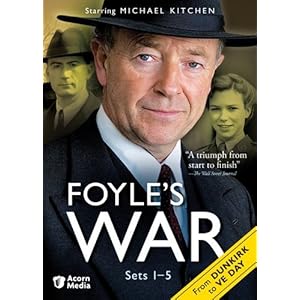
Foyle's War
Foyle's War is perhaps the best BBC mystery series ever...or well, one of the very best. I first started watching it on PBS back in 2002 (can't believe it was that long ago), and now they're playing reruns on KCET (local LA public station). The wonderful thing is I've forgotten how they all end! So I can watch them afresh, and it is just so good. Foyle's War is a detective/mystery series set in the midst of World War II. Murder continues in war time, and mysteries are often wound up in political goings on in the military, black markets, classified information, prisoners of war, etc. (though there's still jealousy and anger and money motivating people, too). It's great stuff. Michael Kitchen is excellent, the writing is excellent. It's intelligent. And there's a subtlety to it--Michael Kitchen as Foyle isn't flashy, he's reserved and observant, but also direct and quietly kick-a**. It's also fascinating to get a peek at war-time England. I think it gives you a sense of how present the war was in everyone's lives--including attacks on their cities. Another fun thing about this series is seeing now established actors when they were only just starting--James McAvoy, Emily Blunt, Laurence Fox--playing suspects, witnesses, etc. And it's now available on Netflix instant view!!!
This is a little late, but looking through Royal Ascot fashion is always entertaining. Here are the best galleries I could find of Ladies Day at the Royal Ascot 2012:
NY Daily News
Tom and Lorenzo
Irish Times
The Guardian
"A Sudden Illness" As I explored her website, I saw that Laura Hillenbrand (author of best-selling books Seabiscuit and Unbroken) won the 2004 National Magazine Award for this article. At the age of 19, she was suddenly overcome with nausea and chills. The doctors said she had food poisoning. This was the beginning of many, many misdiagnoses of an illness that often completely debilitated her--sometimes leaving her unable to sit up in bed. In this article Hillenbrand details her struggles with what would eventually be correctly diagnosed as Chronic Fatigue Syndrome. It is astounding what CFS does, how she survived, the boyfriend who stuck by her side the entire time, and that she has written these books even though sometimes she is only able to write a paragraph a day. Just read it. It's incredible. (If you want to know more about her and her current life, read this Washington Post article).
Jacqueline Bradley is an Australian artist who creates "sculptural and performative objects, installations and costumes using building materials, household items, fabric and wallpaper." To be honest, I don't get all of her work, but what I do get I like. I saw her "Boat Dress" and had to see more. My favorite might be her "Kite Jacket." There are Tree-Hugging Gloves and a Postal Chair and Snake in the Long Grass Shoes. Her work is imaginative, a tad fantastic, and deep. Read more about her and her art here.
Socially Awkward Penguin This is one of my favorite memes. I relate...too much.
Superhero Girl Remember how I reviewed Faith Erin Hicks's graphic novel Friends With Boys? Well, she is also the author of webcomic called The Adventures of Superhero Girl. Superhero Girl lifts heavy objects! She leaps over tall buildings! She saves Toronto from monsters! She also does laundry (and shrinks her cape), forgets to take her mask off while acting as a civilian, sucks at parties, is a sucker for cats, and has an annoyingly perfect older brother. Faith doesn't write them much anymore because she's so busy with books, etc, but there are plenty there to look at. Start from the beginning.
Blackadder Classic British comedy show starring Rowan Adkinson as Blackadder himself. Each season takes place in a different era (Middle Ages, Elizabethan times, Regency, WWI), but they all follow the misfortunes of Edmund Blackadder (who presumably is a descendent/ancestor of the others). The character starts as a bit of a doofus, but with each season becomes more and more clever (so by Blackadder the Third, he's the antithesis of Mr Bean). Blackadder is accompanied by a servant, Baldrick, whose intelligence and hygiene decrease over the seasons, and some dim-witted aristocrat. It's hilarious. My absolute FAVORITE season/series is the Third, which also stars Hugh Laurie as the air-headed fop Prince Regent (don't expect any House hotness). Watch it on Netflix Instant View!
Foyle's War is perhaps the best BBC mystery series ever...or well, one of the very best. I first started watching it on PBS back in 2002 (can't believe it was that long ago), and now they're playing reruns on KCET (local LA public station). The wonderful thing is I've forgotten how they all end! So I can watch them afresh, and it is just so good. Foyle's War is a detective/mystery series set in the midst of World War II. Murder continues in war time, and mysteries are often wound up in political goings on in the military, black markets, classified information, prisoners of war, etc. (though there's still jealousy and anger and money motivating people, too). It's great stuff. Michael Kitchen is excellent, the writing is excellent. It's intelligent. And there's a subtlety to it--Michael Kitchen as Foyle isn't flashy, he's reserved and observant, but also direct and quietly kick-a**. It's also fascinating to get a peek at war-time England. I think it gives you a sense of how present the war was in everyone's lives--including attacks on their cities. Another fun thing about this series is seeing now established actors when they were only just starting--James McAvoy, Emily Blunt, Laurence Fox--playing suspects, witnesses, etc. And it's now available on Netflix instant view!!!
This is a little late, but looking through Royal Ascot fashion is always entertaining. Here are the best galleries I could find of Ladies Day at the Royal Ascot 2012:
NY Daily News
Tom and Lorenzo
Irish Times
The Guardian
"A Sudden Illness" As I explored her website, I saw that Laura Hillenbrand (author of best-selling books Seabiscuit and Unbroken) won the 2004 National Magazine Award for this article. At the age of 19, she was suddenly overcome with nausea and chills. The doctors said she had food poisoning. This was the beginning of many, many misdiagnoses of an illness that often completely debilitated her--sometimes leaving her unable to sit up in bed. In this article Hillenbrand details her struggles with what would eventually be correctly diagnosed as Chronic Fatigue Syndrome. It is astounding what CFS does, how she survived, the boyfriend who stuck by her side the entire time, and that she has written these books even though sometimes she is only able to write a paragraph a day. Just read it. It's incredible. (If you want to know more about her and her current life, read this Washington Post article).
| Boat Dress by Jacqueline Bradley |
Socially Awkward Penguin This is one of my favorite memes. I relate...too much.
![]() |
| (click to enlarge) |
![]() |
| Superhero Girl by Faith Erin Hicks |
Blackadder Classic British comedy show starring Rowan Adkinson as Blackadder himself. Each season takes place in a different era (Middle Ages, Elizabethan times, Regency, WWI), but they all follow the misfortunes of Edmund Blackadder (who presumably is a descendent/ancestor of the others). The character starts as a bit of a doofus, but with each season becomes more and more clever (so by Blackadder the Third, he's the antithesis of Mr Bean). Blackadder is accompanied by a servant, Baldrick, whose intelligence and hygiene decrease over the seasons, and some dim-witted aristocrat. It's hilarious. My absolute FAVORITE season/series is the Third, which also stars Hugh Laurie as the air-headed fop Prince Regent (don't expect any House hotness). Watch it on Netflix Instant View!
Thursday, July 5, 2012
Happy 4th?
Apparently, San Diego had a nice 17-minute long fireworks show planned for last night, but due to a computer glitch they all went off at once, 5 minutes before the show was scheduled to starts. It last no longer than 60 seconds.
Whoops
(In one them you can hear car alarms--was the sound so loud/booming it set off alarms?)
Whoops
(In one them you can hear car alarms--was the sound so loud/booming it set off alarms?)
Subscribe to:
Posts (Atom)