Pages

Tuesday, December 29, 2015

Recent Read: Symphony for the City of the Dead: Dmitri Shostakovich and the Siege of Leningrad

Symphony for the City of the Dead: Dmitri Shostakovich and the Siege of Leningrad by M. T. Anderson

This is a story about war, the power of music, and humanity.

It was just as Shostakovich's career as a composer in St Petersburg (soon to become Leningrad) was getting started that Lenin, and then Stalin seized power over Russia, turning it into a totalitarian hell. And yet, even after living through the atrocities Stalin unleashed on his own people, they rallied to fight for Mother Russia when Hitler invaded with his armies. The Soviets were terribly unprepared, and so Hitler's progress was fast, soon cutting off all of Leningrad's supply lines. Hitler decided that rather than attack, they would just wait for the entire city of 2 million + to starve to death.

And so Shostakovich's home town faced a Russian winter with little to no food or fuel. What role would Shostakovich's music
play in this devastating tragedy? Despite the Soviet government's persecution of him before the war, he was a popular and beloved composer both in the USSR and abroad. As he began work on a new symphony, the Soviet leadership took interest. They knew it could be significant to would-be allies in the west, as well as to a suffering population at home. They went to great lengths to get the score sent abroad to help garner support from Americans, whose aid they were in desperate need of. But the symphony's history would culminate in Leningrad itself, where starving and dying musicians rallied together to perform it to an emotional and desperate crowd. It would become a symbol of hope.

It's a fascinating and tragic story. One of the interesting things is how unreliable the sources they have are. Anderson is candid about the questionable nature of the records of Shostakovich and his life. He dedicates a lot of time to describing Shostakovich's music, and its possible meanings. There has been much speculation over the years, and Anderson gives us a window into many perspectives. As I listened to the symphonies described, I could remember Anderson's own careful descriptions of the music.

What struck me most was the section devoted to Leningrad during the siege. It's astounding what the people there endured, and what some did in such abominable circumstances (both good and bad). As Anderson suggests in the video below, this story indirectly poses the question, "What does it mean to be human?"


Thursday, December 17, 2015

Picture This: Little Elliot Big Family

Little Elliot Big Family by Mike Curato
 
Elliot and Mouse are the best of friends. Mouse is looking forward to his family reunion where he’ll eat his grandmother’s cheese chowder with his 15 brothers, 19 sisters, 25 aunts, 27 uncles, and 147 cousins. When Mouse leaves, Elliot is all alone. He walks around the city and sees families everywhere. “Elliot wondered what it would be like to have 147 cousins. Or even just one.” Just as he’s about to be taken over by loneliness, Mouse comes to find him and invite him to join his family in their reunion.

Mike Curato’s debut, Little Elliot Big City tells the story of how a small polka-dotted elephant and a mouse bonded over a shared love of cupcakes. Maybe it’s my bias talking, but I think this one is even better than the first. As someone who comes from a large extended family, I really appreciated this family-oriented story. You have the main storyline of a lonely elephant, and his touching adoption into the mouse family. You also have a number of lovely family scenes as he walks around 1940s New York: brothers playing baseball, fathers playing with their children, sisters sharing secrets. It’s touching and it evokes the feelings I have about family.

Curato’s pencil illustrations are soft and inviting. He creates a vintage feel with his unique combination of pencil and Photoshop (read about it here). Often his illustrations look like they could be scenes out of an old movie. He uses color and composition to enhance the mood and emotions of the story. Curato pictures Elliot as a small, lone character among a sea of empty seats, or as the only soul on a snowy street. Page after page is perfectly composed. I just love looking at the illustrations. The family photographs that cover the endpages are a kick, too.


Monday, December 14, 2015

Picture This: Fire Engine No. 9

Fire Engine No. 9 by Mike Austin


Fire Engine No. 9 is exactly what it sounds like—a book showing a day in the life of fire engine number nine. The text is almost all sound effects—the whoosh of firemen sliding down the pole, the brrriing of the alarm, the bark of the Dalmatian. The illustrations are exciting, colorful, and action-packed. Austin uses each double-page spread to its fullest advantage. The endpages show fire fighters' tools, and there's a small lesson on fire safety at the end. This is a must for truck-loving kids.


Thursday, December 10, 2015

Picture This In a Village by the Sea

In a Village by the Sea by Muon Van, illustrated by April Chu

 On the surface this is a simple tale—a day in the life of a family in a Vietnamese fishing village. The father goes out to sea early in the morning; his wife stays home and makes soup as her child naps. They eagerly wait for father’s return.

The story turns a bit magical when the cricket who lives in a hole in the floor paints a scene of the father’s activities. He’s caught in a storm, looking at a picture of his family, hoping to return to them.

It’s beautifully done in every way. It feels a bit like gently rolling waves—rhythmic and soothing in its cyclical nature. Each new page repeats a bit from the previous page in text and illustration. And the whole tale comes full circle at the end as the father envisions his family in that house that has already been so carefully described. Where at the beginning he looked back toward his home, the book ends with his family looking out to sea toward him.

The illustrations are beautiful. They’re filled with wonderful details. I love seeing the carefully chopped vegetables on the table, the chilies hanging on the kitchen wall, the flip flops lined up just outside the back door. Chu uses creative angles and perspectives to bring visual interest. I love the overhead view of the kitchen with the baby reaching for the dog.

And then there’s that cricket. Is his painting really happening or has he imagined it? But perhaps that’s the point. In the author’s note, Muon Van says of her own fisherman father, “we would often wonder where my father was, if he found the catch he was looking for, and when he would return home again, safe and sound.” Those mysterious paintings convey this feeling very well.

On a more philosophical note, this story captures the essence of life—work, food, and family—and the beauty of those simple necessities. It underscores what home is.


Wednesday, December 9, 2015

Picture This: Wait

Wait by Antoinette Portis

Antoinette Portis’s Wait contains two words (okay, three, but for my purposes, let’s say two): “Hurry!” and “Wait.” A mother is rushing to get to the train on time, but her son is much more interested in the world they’re passing than punctuality. He wants to pet the dog, and watch the construction and help feed the ducks, and look at the tropical fish in the window.

But of course, mom finally relents when her son points out a double rainbow. “Yes, wait,” she says (there’s the third word).

Portis has illustrated the book in a flat style, with thick charcoal outlines and lots of color—bold eye-catching, especially for young readers. Readers will be able to anticipate each new “wait” request because of details in the illustrations. I love how much well it portrays a fundamental difference between adults and children. It reminds me of a street photographer describing how children notice everything. He can stand and take pictures of people walking by in New York City, and the adults often walk by without acknowledging him—whether they’re too busy to stop, don’t notice or don’t care. Children, on the other hand, always notice and always look. Children haven’t lost their sense of wonder at the world. And I think this book reminds us of that and how much there is around us that’s worth noticing.


Wednesday, December 2, 2015

Independent Reading: Flop to the Top

Flop to the Top by Eleanor Davis and Drew Weing

Wanda is a superstar, complete with fans (unwilling siblings), a red carpet, and glamorous clothing. When the selfie she takes with her dog Wilbur goes viral, Wanda is dismayed to find that the crowds of fans aren’t there for her, they’re there for Wilbur! As Wilbur skyrockets to stardom, Wanda gets left behind.

Furious that her rightful fame has been stolen by her lump of a dog, Wanda goes after him, trying to convince the world that Wilbur is not the funny, cool one, rather she is. But soon jealousy morphs to genuine concern for her beloved pet, and Wanda seeks reconciliation. This one is funny, sweet and quite modern.


Friday, November 20, 2015

Recent Read: Dream On, Amber

Dream On, Amber by Emma Shevah

 “You know how sometimes you get an idea? And then you follow that idea and complicate your life so badly that you wish it had never popped into your head? Yeah. That’s what happened. Me and my genius idea.”

Eleven-year-old Ambra Alessandra Leola Kimiko Miyamoto, who goes by Amber (“I have no idea why my parents gave me all those hideous names but they must have wanted to ruin my life you know?”), lives with her mom and six-year-old sister, Bella in South London. Her dad left the family when they were little. His absence feels like a gaping hole in Amber’s life. When Bella decides to write a letter to her dad, Amber has an idea. She writes Bella back, posing as their father, hoping to save her sister from the pain that she feels. But of course, this ruse proves difficult to maintain, especially with a sister who has a vivid imagination.

Funny, charming and poignant. This easily could have been sappy or didactic, but Amber’s spunky narration always moderates the more serious subject-matter. Family is central to the book, and while it does highlight the meaning of a dad and having one in your life, it also shows how family is family no matter who is or isn’t there. The way this family comes together and Amber tries to help her sister (even if it is a little ill-advised) is heartening. I loved the characters and enjoyed reading Amber’s narration. The letters exchanged between sisters cracked me up. This is a winner.

Wednesday, November 18, 2015

Picture This: The Bear Ate Your Sandwich

The Bear Ate Your Sandwich by Julia Sarcone-Roach

“By now I think you know what happened to your sandwich. But you may not know how it happened. So let me tell you.” 

So begins this story of a bear who finds a delicious treat in the bed of a pickup truck, falls asleep, and wakes up in the middle of the city. He explores this “new forest,” discovering climbing spots, new smells, places to scratch an itch, and a very delectable looking sandwich. You can probably guess what happens next.

The saturated illustrations invite the reader into a warm and dreamy world, created with acrylic paint and pencil. The facial expressions and movements of the animals throughout are wonderful and often add humor. But did you notice who is telling the story? The end reveals the narrator of this tale (a dog), immediately calling into question everything he just recounted—especially with that suspicious piece of lettuce right at his feet. And don’t forget to look at the endpapers!


Monday, November 9, 2015

Picture This: The Night World

The Night World by Mordicai Gerstein

In the middle of the night, Sylvie the cat wakes up her owner. She pesters him to follow her, to go outside. “It’s coming,” she says. Outside, his world is in shadow. The boy discovers the night world for the first time. All the familiar plants look different, animals he’s never seen are everywhere. They are anticipating the arrival of something special. Looking to the sky, a glow forms. It increases, and colors start to develop until everything is light and bright with the sun’s morning rays.

In the author’s note, Mordecai Gerstein describes waking up in the middle of the night at the age of four and seeing a foreign place where his backyard should be—it was the night world. In this book, he has created a foreign and wondrous night world on the page, filled with shapes and shadows. In grays and black, Gerstein fills each page with nighttime life. The sunrise is an explosion of color. Gerstein says in his note that he thinks watching a sunrise is like “watching the creation of the world,” and he captures that feeling in the pages.


Monday, November 2, 2015

Picture This: Rude Cakes

Rude Cakes by Rowboat Watkins

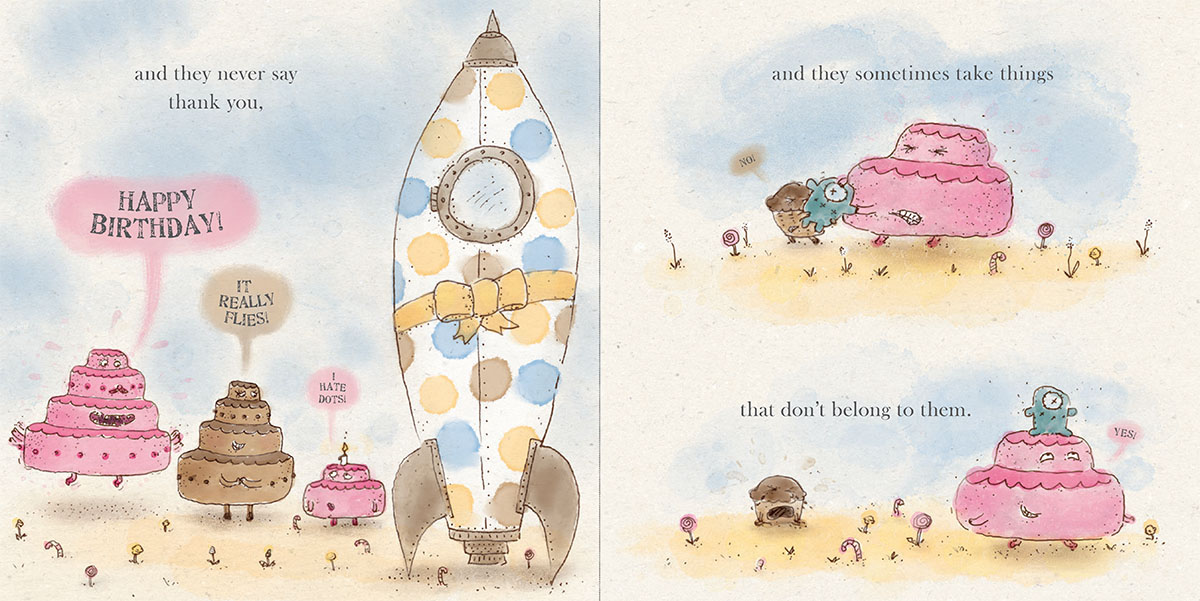
Rude Cakes is a silly and strange tale of a rude, ungrateful cake. In the middle of the night a gentle giant of a cyclops mistakes him for a “jaunty little hat,” takes him from his bed, and plops the cake on top of his head to wear. If that weren’t strange enough, it turns out that giant cyclopses are very polite and kind, and when the cake finally learns to say please, the cyclops apologizes and returns him to his home.

So much of this funny book is just absurd. It’s about a cake. You can tell it’s (the gender is not clear) young because it only has 2 tiers instead of 4 like its parents. You can tell which parent is the mom and which is the dad, because the dad has a frosting moustache. It steals a toy from a poor defenseless cupcake. When faced with a bath, it thinks “seriously… I’m a cake…How dirty can I be?” And then there are these giant oval blobs with one eye—the cyclopses—who like to wear “jaunty little hats.” And this cyclops mistakes the cake for a hat, so the cake ends up stranded on the cylops’s head. Meanwhile the cyclopses are so nice, so polite, they’re falling over each other to compliment the hat and wait in line to try it on (because of course a cyclops would share). It’s ridiculous…and hilarious. What’s more is that Rowboat Watkins (yes, that’s the author’s name) really nails the rudeness on the head, so despite all its silliness, it rings true.

Tuesday, October 27, 2015

Picture This / Independent Reading: Two Mice

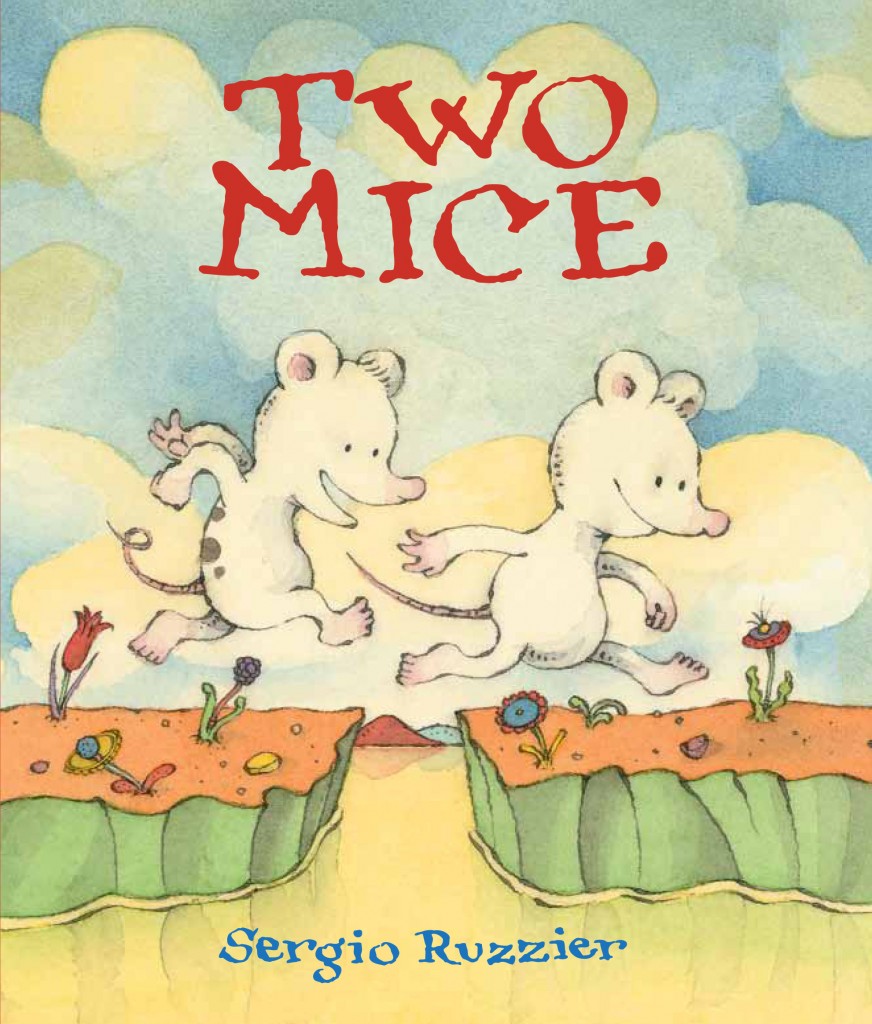
Two Mice by Sergio Ruzzier

This simple picture book is told in two word phrases that begin the numbers one, two or three. Much of the story is told through implication and illustrations. The words say “two mice, three cookies.” We can see in the illustration what it means when there are not an equal number of cookies for the each mouse, or what it means when there’s only one rower in the boat. The reader sees that the mice’s “two trees” look a lot legs and then see it confirmed on the next page with “three tears,” as the mice get carried away by an eagle. I love the simplicity of it, the pattern of repeating the numbers in different contexts, the humor, and the sweetness of the ending. The illustrations are colorful, warm and appealing. It’s all very kid-friendly, including the small size, perfect for small hands. I’m rooting for this one to win a Geisel.


Friday, October 23, 2015

Picture This: Boats for Papa

Boats for Papa by Jessixa Bagley 

“Buckley and his mama lived in a small wooden house by the sea. They didn’t have much, but they always had each other.”

Buckley the beaver likes to collect driftwood and build boats. He sends them out to sea with a note to his father, knowing that if they don’t come back to shore, they’ve reached Papa.

We are left to infer that Buckley’s father is gone for good (probably passed away, though ambiguous). Buckley himself discovers this when he forgets his note, runs back to the house to fetch some paper and inadvertently finds a desk full of boats he once sent out to sea. We see his look of dismay, but he sends the boat out to sea as usual anyway. Then the reader watches as his mother goes back out to the beach after bedtime to retrieve the boat. It’s absolutely lovely.

It may sound like a story about death and loss, and it is, but what strikes me even more than the absence of Buckley’s father is the presence of Buckley’s mother. She is there making Buckley dinner and lunch, appreciating his water-bound creations, celebrating his Buckley’s birthday themed cakes and dress up, walking with him on the beach, tucking him into bed at night. I look at this as a beautiful and tender ode to mothers.

The watercolor and ink illustrations are lovely. Bagley creates a watery, seaside feel with colors that seep and run into each other. She then creates precise, detailed scenes on top of those seascapes. I love looking at Buckley’s activities with his mother. Their birthday picnics include details like a pile of the removed, already blown out birthday candles, lying on a napkin. Every seascape includes objects washed ashore—seaweed and driftwood and shells—as well as occasional sea life. Bagley and his mother are an endearing mixture of weird, stout, and cute. Buckley develops as an artist over the course of the story. While he starts with just one piece of driftwood plus a mast stuck on top, he eventually sketches and designs complex ships that he lovingly builds and paints. Don’t be surprised to hear this announced as a Caldecott winner next year.


Thursday, October 22, 2015

Recent Read: The Nest

The Nest by Kenneth Oppel, illustrated by Jon Klassen

Steven worries a lot. He especially worries about his new brother, who was just born with a host of health problems. Soon after the baby’s birth, an angelic creature visits Steve in his dreams, promising that she can fix the baby. Her vists soothe Steven, and even when he finds out she is the wasp queen building a nest on his roof, he feels good, like everything is going to be all right. But can he really trust the wasp queen? Is she as benevolent as she seems? What does she mean when she refers to the “new” baby? Or is she a figment of his imagination, conjured in a time of anxiety?

The Nest captured me from the very first page. I knew nothing about it. If you would like a similar experience, you may want to stop reading. It’s a hard novel to talk about without giving things away. I’m not including spoilers, but if you want to know less rather than more (I recommend it), now’s the time to go get this excellently crafted horror novel for middle grader readers, and start reading.

The Nest is a trip—an eerie, horrifying trip. This is not the kind of horror that involves gore, murders, or monsters. This seemingly gentle, benevolent wasp queen has offered to help Steven and his family, keep them safe. This is especially appealing to Steve, who has had therapy for his anxiety. And yet something sinister seems to lurk somewhere beneath the surface. The reader is left to infer the wasp queen’s true nature from little details. As Steve warmly thinks about how the wasps are repairing his baby brother, the wasp queen tells him he’ll be even happier when he sees the baby in the crib. “He’s already in the crib,” Steve says, confused. “Not your new baby,” she says in reply. And just like that, Steve’s (and perhaps the reader’s) comfort is replaced by concern and dread. Little by little, Oppel builds on this sense of foreboding until Steve must make crucial decisions about who he trusts and what he values in a nail-biting climax.


Tuesday, October 20, 2015

Picture This: Float

Float by Daniel Miyares

Daniel Miyares portrays a boy’s adventures with a newspaper in this new wordless picture book. The boy folds a boat and plays with it in puddles and the rain until it gets swept away. He goes home dejected, only to find another piece of newspaper and a new way to fold it—an airplane!

A book that relishes the simple pleasures in life, it shows how quickly things can go from up to down to up again. Beautifully drawn by Daniel Miyares, the book is almost all grays except for the dashes of color found in the boy’s rain gear and the newspaper. Miyares’s graphic sensibilities are apparent in his perspectives and composition. I love how clearly and vividly his emotions come through. The endpages contain diagrams for how to fold the boat and plane yourself (I’ve tried them, they work).


Wednesday, October 14, 2015

Recent Read: Tommy: The Gun that Changed America

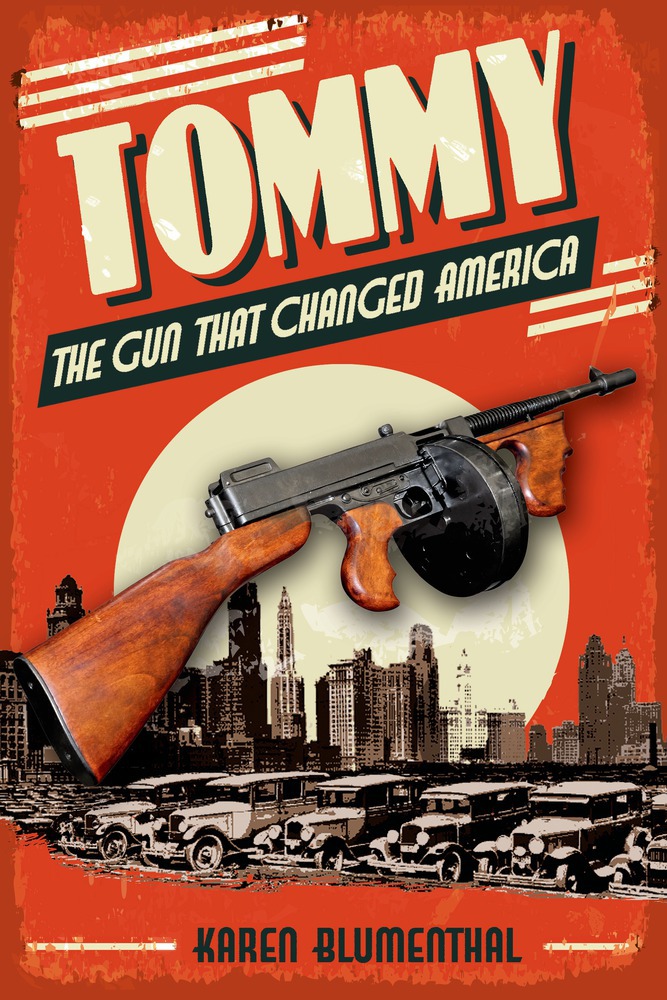
Tommy: The Gun that Changed America by Karen Blumenthal

When john Taliaferro Thompson developed a lightweight, fast-firing weapon, he was hoping to give American troops an advantage in World War I. He didn’t anticipate that the Thompson submachine gun would become the weapon of choice for bootleggers, gangsters and bank robbers. This is the story of the Tommy gun, a weapon created with the best of intentions, and made infamous by those with the worst of intentions.

Blumenthal crafts an interesting narrative for the gun, which details crimes and criminals, including such infamous characters as public enemy number one, John Dillinger, as well as the equally infamous Bureau of Investigation that pursued such criminals.

The introduction of the Tommy gun into society created a need for new regulation and gun laws, which were almost nonexistent before massacres and robberies committed with the gun made it national news. Blumenthal shows how the arguments made for and against gun regulation and laws back in the 20s and 30s weren’t so different from the arguments we hear today. This is an interesting book that contains the kind of unbelievable drama you’d find in a gangster movie, but it’s all true. (I watched 2 James Cagney movies after I finished it.)

Wednesday, September 23, 2015

Picture This: Wolfie the Bunny

Wolfie the Bunny by Ame Dyckman, illustrated by Zachariah OHora

When the bunny family finds a baby wolf on their front doorstep, they’re smitten. They decide to take him in as their own—all of them, that is, except for Dot. “He’s going to eat us all up!” she exclaims again and again as her parents fuss over and spoil the new baby. When all the food in the house disappears overnight, will Dot’s parents finally see the light?

OHora’s bold and colorful illustrations and Dyckman’s comic storytelling gifts combine to create a perfectly timed, laughter- and drama-filled tale of families and new siblings. Wolfie and Dot are sent to the store to replenish the carrot supply, Dot scowling, Wolfie cheerfully wearing a pink bunny onesie, when a bear decides the Wolfie would make a perfect dinner! Dot must think fast if she’s going to save herself or Wolfie. It’s sure to be a blast with kids.