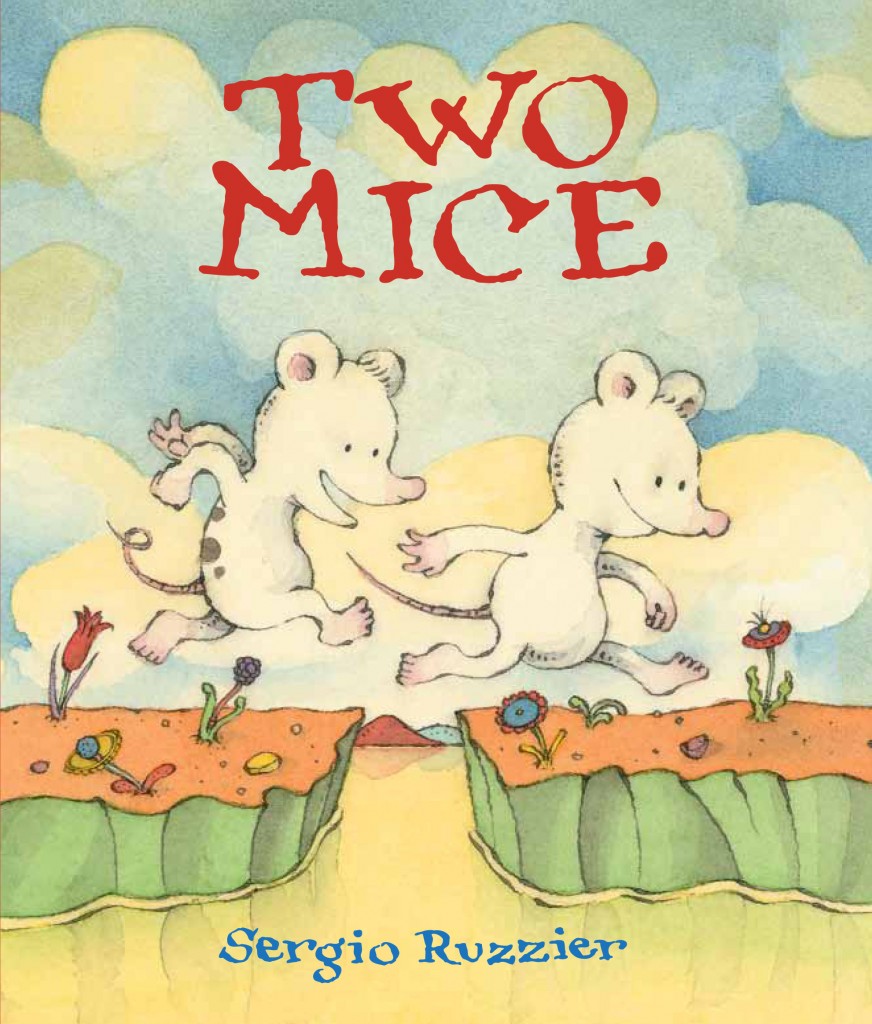
This simple picture book is told in two word phrases that begin the numbers one, two or three. Much of the story is told through implication and illustrations. The words say “two mice, three cookies.” We can see in the illustration what it means when there are not an equal number of cookies for the each mouse, or what it means when there’s only one rower in the boat. The reader sees that the mice’s “two trees” look a lot legs and then see it confirmed on the next page with “three tears,” as the mice get carried away by an eagle. I love the simplicity of it, the pattern of repeating the numbers in different contexts, the humor, and the sweetness of the ending. The illustrations are colorful, warm and appealing. It’s all very kid-friendly, including the small size, perfect for small hands. I’m rooting for this one to win a Geisel.
“Buckley and his mama lived in a small wooden house by the sea. They didn’t have much, but they always had each other.”
Buckley the beaver likes to collect driftwood and build boats. He sends them out to sea with a note to his father, knowing that if they don’t come back to shore, they’ve reached Papa.
We are left to infer that Buckley’s father is gone for good (probably passed away, though ambiguous). Buckley himself discovers this when he forgets his note, runs back to the house to fetch some paper and inadvertently finds a desk full of boats he once sent out to sea. We see his look of dismay, but he sends the boat out to sea as usual anyway. Then the reader watches as his mother goes back out to the beach after bedtime to retrieve the boat. It’s absolutely lovely.
It may sound like a story about death and loss, and it is, but what strikes me even more than the absence of Buckley’s father is the presence of Buckley’s mother. She is there making Buckley dinner and lunch, appreciating his water-bound creations, celebrating his Buckley’s birthday themed cakes and dress up, walking with him on the beach, tucking him into bed at night. I look at this as a beautiful and tender ode to mothers.
The watercolor and ink illustrations are lovely. Bagley creates a watery, seaside feel with colors that seep and run into each other. She then creates precise, detailed scenes on top of those seascapes. I love looking at Buckley’s activities with his mother. Their birthday picnics include details like a pile of the removed, already blown out birthday candles, lying on a napkin. Every seascape includes objects washed ashore—seaweed and driftwood and shells—as well as occasional sea life. Bagley and his mother are an endearing mixture of weird, stout, and cute. Buckley develops as an artist over the course of the story. While he starts with just one piece of driftwood plus a mast stuck on top, he eventually sketches and designs complex ships that he lovingly builds and paints. Don’t be surprised to hear this announced as a Caldecott winner next year.
The Nest by Kenneth Oppel, illustrated by Jon Klassen
Steven worries a lot. He especially worries about his new brother, who was just born with a host of health problems. Soon after the baby’s birth, an angelic creature visits Steve in his dreams, promising that she can fix the baby. Her vists soothe Steven, and even when he finds out she is the wasp queen building a nest on his roof, he feels good, like everything is going to be all right. But can he really trust the wasp queen? Is she as benevolent as she seems? What does she mean when she refers to the “new” baby? Or is she a figment of his imagination, conjured in a time of anxiety?
The Nest captured me from the very first page. I knew nothing about it. If you would like a similar experience, you may want to stop reading. It’s a hard novel to talk about without giving things away. I’m not including spoilers, but if you want to know less rather than more (I recommend it), now’s the time to go get this excellently crafted horror novel for middle grader readers, and start reading.
The Nest is a trip—an eerie, horrifying trip. This is not the kind of horror that involves gore, murders, or monsters. This seemingly gentle, benevolent wasp queen has offered to help Steven and his family, keep them safe. This is especially appealing to Steve, who has had therapy for his anxiety. And yet something sinister seems to lurk somewhere beneath the surface. The reader is left to infer the wasp queen’s true nature from little details. As Steve warmly thinks about how the wasps are repairing his baby brother, the wasp queen tells him he’ll be even happier when he sees the baby in the crib. “He’s already in the crib,” Steve says, confused. “Not your new baby,” she says in reply. And just like that, Steve’s (and perhaps the reader’s) comfort is replaced by concern and dread. Little by little, Oppel builds on this sense of foreboding until Steve must make crucial decisions about who he trusts and what he values in a nail-biting climax.
Daniel Miyares portrays a boy’s adventures with a newspaper in this new wordless picture book. The boy folds a boat and plays with it in puddles and the rain until it gets swept away. He goes home dejected, only to find another piece of newspaper and a new way to fold it—an airplane!
A book that relishes the simple pleasures in life, it shows how quickly things can go from up to down to up again. Beautifully drawn by Daniel Miyares, the book is almost all grays except for the dashes of color found in the boy’s rain gear and the newspaper. Miyares’s graphic sensibilities are apparent in his perspectives and composition. I love how clearly and vividly his emotions come through. The endpages contain diagrams for how to fold the boat and plane yourself (I’ve tried them, they work).
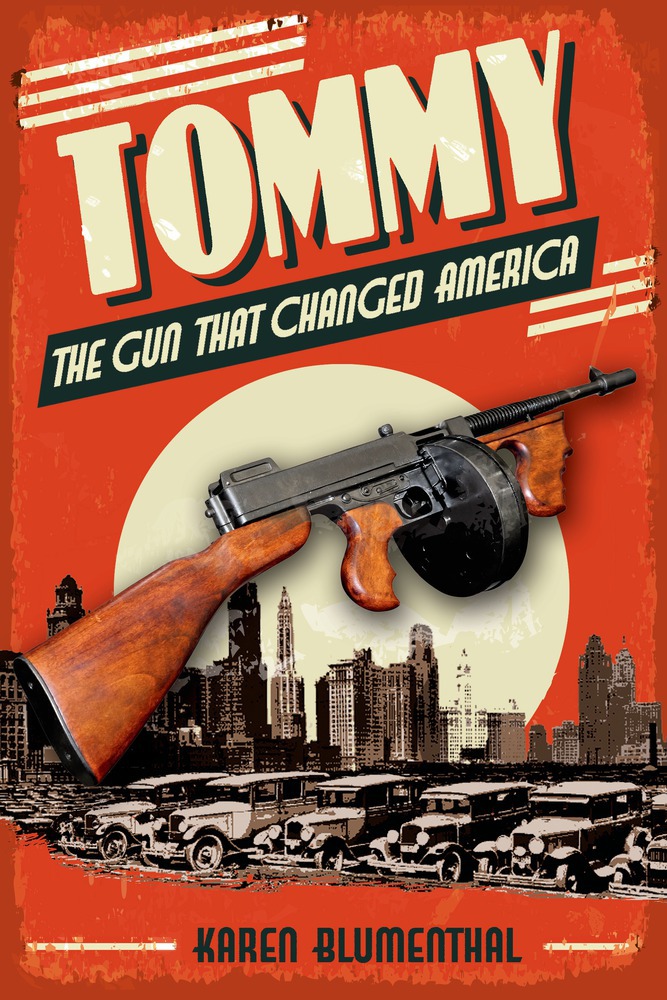
Tommy: The Gun that Changed America by Karen Blumenthal
When john Taliaferro Thompson developed a lightweight, fast-firing weapon, he was hoping to give American troops an advantage in World War I. He didn’t anticipate that the Thompson submachine gun would become the weapon of choice for bootleggers, gangsters and bank robbers. This is the story of the Tommy gun, a weapon created with the best of intentions, and made infamous by those with the worst of intentions.
Blumenthal crafts an interesting narrative for the gun, which details crimes and criminals, including such infamous characters as public enemy number one, John Dillinger, as well as the equally infamous Bureau of Investigation that pursued such criminals.
The introduction of the Tommy gun into society created a need for new regulation and gun laws, which were almost nonexistent before massacres and robberies committed with the gun made it national news. Blumenthal shows how the arguments made for and against gun regulation and laws back in the 20s and 30s weren’t so different from the arguments we hear today. This is an interesting book that contains the kind of unbelievable drama you’d find in a gangster movie, but it’s all true. (I watched 2 James Cagney movies after I finished it.)