Thursday, May 30, 2013
England Part 3: Lacock
On the way to Bath, we made a stop in the old village of Lacock, aka Cranford (also Meryton of Pride & Prejudice, something in the '95 Emma, home to Harry Potter's parents' house, etc, etc). I thought we could spend an hour there. We were there for three. We didn't even have time to visit the Abbey. Best village we went to the whole trip.
Wednesday, May 29, 2013
England Part 2: The Cotswolds
I've wanted to go to the Cotswolds since hearing my high school English teacher talk about them. We stayed in Cheltenham, and got more of a glimpse than an actual tour of the Cotswolds. It was the one pleasant day of weather we had.
First, we went to Snowshill Manor. This country house was owned by Charles Paget Wade (1883-1956), an eclectic collector of what seemed like everything. He admired and appreciated craftsmanship of all kinds. He didn't live in his house--that was for his collections (22,000 items). Instead he lived in the barn and slept in a Tudor box bed. The guide said that he was arrested once for walking around London wearing one of his suits of armor.
His collections include samurai armor, needlework, paintings, furniture (armoirs, chairs, etc), small carvings made out of chicken bones by men in prison, model ships, masks, clocks (he loved clocks), swords, instruments, globes, spinning wheels (there was an entire room of them), dolls and toys, pots and pans, shuttles used in weaving, shields, keys, canes, the list goes on and on. You can look through the collections online here.
It was so unusual. I loved seeing everything. I'd love to work there as an archivist or registrar. My favorite room was the attic. It was filled with bicycles (they were even hanging from the ceiling), and around the edge were baby carriages and carriers from different time periods.
Next we drove to Chipping Campden.
The only other stop we were able to make was Bourton-on-the-Water, a picturesque little village I didn't get any particularly good photos of. The lady in the photo below was tending to her garden in wellies and an apron. Many homes' yards go straight to the river, while here, a canal meets up with her garden.
First, we went to Snowshill Manor. This country house was owned by Charles Paget Wade (1883-1956), an eclectic collector of what seemed like everything. He admired and appreciated craftsmanship of all kinds. He didn't live in his house--that was for his collections (22,000 items). Instead he lived in the barn and slept in a Tudor box bed. The guide said that he was arrested once for walking around London wearing one of his suits of armor.
His collections include samurai armor, needlework, paintings, furniture (armoirs, chairs, etc), small carvings made out of chicken bones by men in prison, model ships, masks, clocks (he loved clocks), swords, instruments, globes, spinning wheels (there was an entire room of them), dolls and toys, pots and pans, shuttles used in weaving, shields, keys, canes, the list goes on and on. You can look through the collections online here.
It was so unusual. I loved seeing everything. I'd love to work there as an archivist or registrar. My favorite room was the attic. It was filled with bicycles (they were even hanging from the ceiling), and around the edge were baby carriages and carriers from different time periods.
Next we drove to Chipping Campden.
The only other stop we were able to make was Bourton-on-the-Water, a picturesque little village I didn't get any particularly good photos of. The lady in the photo below was tending to her garden in wellies and an apron. Many homes' yards go straight to the river, while here, a canal meets up with her garden.
Tuesday, May 28, 2013
England Part 1: Oxford and Highclere Castle
Last month I went to England with two of my aunts, and one of my cousins. We stayed in Oxford, Cheltenham, and Bath. It was as if we were there in the dead of winter, with the freezing weather, snow, wind, clouds, and a dearth of leaves and flowers, hence the lack of color in the photos. But we were still in England, so how bad could it be, really?
Our first stop was Oxford, home of the Bodleian Library, Inspector Lewis, many colleges, many pubs, and many bicycles.

From Oxford, we took a day trip to the one, the only, Downton Abbey!!! Needless to say, I was thrilled. Because they don't allow photography inside, I don't have any images of the dining room, the library with its window-doors that open to the outdoors in the summer, Lady Edith's bedroom, the fabulous stairs and entryway, or the hallway down which Lady Mary carried Pamouk's body. I don't have photos of the frayed tapestries or peeling paint either. It's not quite as picture perfect in person, but it was beautiful.
Our first stop was Oxford, home of the Bodleian Library, Inspector Lewis, many colleges, many pubs, and many bicycles.
| "Bicycles attached to these rails will be removed" |
And, of course, the obligatory Bodleian Library photo. We took the tour. It was cool, but I really wish I could have seen more. They should have a Library Tour for Librarians.
I liked the dining hall at Balliol college. Instead of the posh cushioned dining chairs of Christ Church College, they have well worn wooden benches and tables. Who knows how old they are.
From Oxford, we took a day trip to the one, the only, Downton Abbey!!! Needless to say, I was thrilled. Because they don't allow photography inside, I don't have any images of the dining room, the library with its window-doors that open to the outdoors in the summer, Lady Edith's bedroom, the fabulous stairs and entryway, or the hallway down which Lady Mary carried Pamouk's body. I don't have photos of the frayed tapestries or peeling paint either. It's not quite as picture perfect in person, but it was beautiful.
| Highclere Castle |
Saturday, May 25, 2013
"A writer is a person who cares what words mean, what they say, how they say it. Writers know words are their way towards truth and freedom, and so they use them with care, with thought, with fear, with delight. By using words well they strengthen their souls. Story-tellers and poets spend their lives learning that skill and art of using words well. And their words make the souls of their readers stronger, brighter, deeper."
-Ursula Le Guin
-Ursula Le Guin
Wednesday, May 22, 2013
LM at the Masonic Lodge in Hollywood Forever Cemetery
This was my view last night:
2nd row center. It was just Laura and her guitar. It was as wonderful as you might expect. I look forward to her coming back to promote Once I Was an Eagle (which drops next Tues). Listen to the full album stream here. So good.
Tuesday, May 7, 2013
Picture This: The Dark
The Dark by Lemony Snicket, illustrated by Jon Klassen
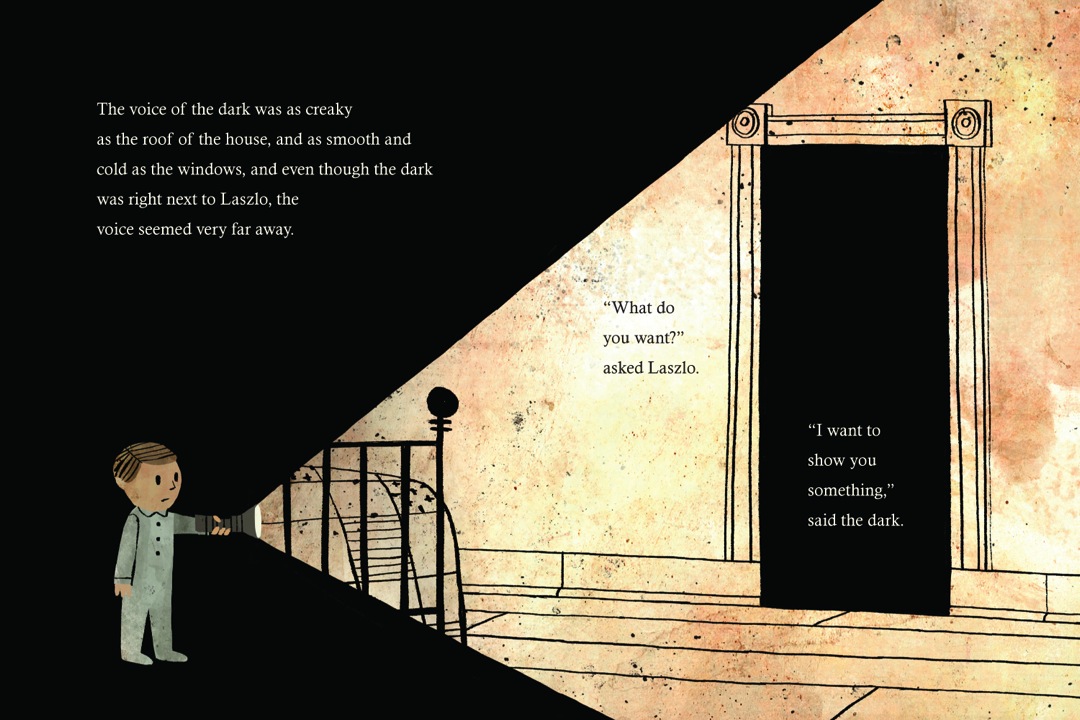
Laszlo is afraid of the dark. One night, the dark unexpectedly comes to visit him in his room. "I want to show you something," the dark says. Flashlight in hand, Laszlo follows the dark into the basement. What will he find?
This is near-perfect book. It begs to be read aloud, with Snicket's poetic use of alliteration and consonance. The dark is a character that speaks to Laszlo (but it is not a monstrous or malicious entity). Klassen uses a muted color palette and plays with light and shadow, using a stark black for the dark and gradations of shadow and light, which all together create interesting shapes and contrasts. The dark comes to visit suddenly, and Laszlo turns on his flashlight to follow the dark to the basement. We only see what the flashlight illuminates. Klassen changes the angle and position of Laszlo and his flashlight in each spread. Once they've reached the basement, the dark invites Laszlo to open the bottom drawer of a chest to discover a number of light bulbs. For some readers, this may be the moment when they realize that the dark came to visit because Laszlo's trusty nightlight went out.
What really takes The Dark down a notch is page that black page filled with text. It takes the reader out of the story, stopping the momentum dead. It's repetitive, reviewing points already addressed/described. It's a didactic lecture, explaining where you would be without a creaky roof, cold window, set of stairs, and the dark itself. Instead of allowing the reader to figure out the story and fill in gaps, Snicket does it all for you in this page, and it almost ruins the book as a whole. Were it not for that page, I would say this is an early Caldecott contender.
Laszlo is afraid of the dark. One night, the dark unexpectedly comes to visit him in his room. "I want to show you something," the dark says. Flashlight in hand, Laszlo follows the dark into the basement. What will he find?
This is near-perfect book. It begs to be read aloud, with Snicket's poetic use of alliteration and consonance. The dark is a character that speaks to Laszlo (but it is not a monstrous or malicious entity). Klassen uses a muted color palette and plays with light and shadow, using a stark black for the dark and gradations of shadow and light, which all together create interesting shapes and contrasts. The dark comes to visit suddenly, and Laszlo turns on his flashlight to follow the dark to the basement. We only see what the flashlight illuminates. Klassen changes the angle and position of Laszlo and his flashlight in each spread. Once they've reached the basement, the dark invites Laszlo to open the bottom drawer of a chest to discover a number of light bulbs. For some readers, this may be the moment when they realize that the dark came to visit because Laszlo's trusty nightlight went out.
What really takes The Dark down a notch is page that black page filled with text. It takes the reader out of the story, stopping the momentum dead. It's repetitive, reviewing points already addressed/described. It's a didactic lecture, explaining where you would be without a creaky roof, cold window, set of stairs, and the dark itself. Instead of allowing the reader to figure out the story and fill in gaps, Snicket does it all for you in this page, and it almost ruins the book as a whole. Were it not for that page, I would say this is an early Caldecott contender.
| illustration from The Dark by Lemony Snicket, illustrated by Jon Klassen |
Tuesday, April 30, 2013
Recent Read: The False Prince
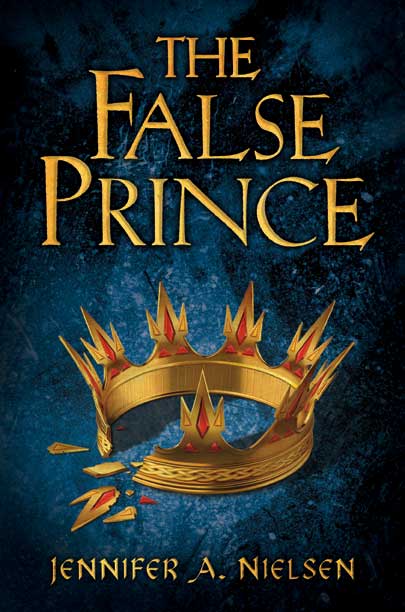
Sage, a spunky orphan, is enjoying his life of thievery, dirt, and avoiding punishment, when a nobleman named Conner plucks him out of his hardscrabble life, along with three other orphans. The cunning Conner reveals that the orphans are in a competition to impersonate the long-lost prince of Carthya. But while Sage isn't sure he wants to give up his freedom or risk committing treason, he might lose his life if he is not chosen.
The False Prince by Jennifer A. Nielsen was so good. To start, the premise is an interesting and exciting one that pulls the reader in right away. Even though it has a competing-for-your-life set up (complete with training) that's so overdone in a post-Hunger Games publishing world, I didn't realize it until now. In other words, this story comes off as original and interesting (instead of tired). I loved the characters--Sage is wonderfully defiant, clever and charming, with a strong character (despite his sometimes questionable morals). The plot and politics, as well as the relationships are complex and intriguing. This is a smart, fast-paced read I'd recommend to all readers, but especially reluctant ones.
Subscribe to:
Posts (Atom)


.jpg)