Pages

Monday, November 25, 2013

Picture This: This is the Rope

This is the Rope by Jacqueline Woodson, illustrated by James Ransome

"This is the rope my grandmother found beneath an old tree a long time ago back home in South Carolina." That same rope ties the luggage to the car when the family moves to New York City. It's the rope used by this family from one generation to the next as they build a better life.

Jacqueline Woodson, in lyrical simplicity, tells the story of the Great Migration through one fictional family. Her family was among the 6 million+ African Americans who left the South to find a better life with more opportunities in the North and other more tolerant parts of the country. The story doesn't feel historical so much as personal and nostalgic. Through everyday activities, we look on as the parents move to the city, care for their family, watch as their children grow, go off to college and start families of their own. My favorite spread is the collection of family photos decorating the piano. I love the image of families paired with the text about a father teaching his child how to tie a sailor's knot. It's touching without being sentimental--a hard balance to achieve. Woodson and Ransome succeed in creating that balance throughout. It's lovely.


Monday, November 18, 2013

"...if there is one truism of successful Y.A., it’s that the book’s unrelenting emphasis must be on character and event, and not the brilliance of the author’s viewpoint. For me it was a humbling experience, trying to shed the essential narcissism of my writer’s project because my teen readers wouldn’t tolerate it. But on crawling out on the other side, I saw that what Y.A. novels value above all else is storytelling. It took me even longer to realize that that needn’t lessen a book’s complexity — it just prioritizes the reader’s experience. Ultimately, if there’s a refrain I hear from the many adults turning to Y.A., it’s not that the books are any simpler. They’re just more pleasurable."

Eliot Schrefer, "Junior Varsity is Where the Work Gets Done"

This is a great article about writing YA lit.

Saturday, November 16, 2013

Picture This: Again!

Again! by Emily Gravett

Little dragon likes to have a bedtime story... again... and again...and again.

Emily Gravett strikes again (no pun intended!) with a funny, unique little gem. One of the great things about this book is that it's two stories that collide. Little Dragon's storybook begins, "Cedric the dragon's a bright angry red. He's never, his whole life, (not once) been to bed." He torments princesses and trolls. But each time Mama Dragon picks up the book to reread it (satisfying her child's requests/demands), the story changes ever so slightly. Cedric apologizes to the trolls, becomes more peaceful, and even decides it's time for bed. As his temper cools, his red color gradually fades to green. Meanwhile, Little Dragon, frustrated with his sleepy mother, starts to turn red. His anger escalates into full scale tantrum when his mother finally succumbs to sleep. He shouts and stomps and shakes and fumes...to disastrous (and funny) results. I love the facial expressions--the sleeping mama dragon reminds me of my aging parents, while the little dragon goes from sweet and imploring to angry and demanding.

So in this book, you have: expressive, appealing illustrations; nice illustrations; a relatable storyline with intertwined themes (a child asking for his favorite story over and over, losing your temper, sleep deprivation's effect on temper); endpages that start and end the story (every single page has some element of the story on it--even the bookflap is part of the story!!!); details, details details (Cedric, the trolls, the princess, and even the dragon in the letter C are always part of the story); humor, good rhyming and rhythm, big time kid appeal. I highly recommend this one.


Things to notice: princess's "I"m not having it" attitude, poor crying trolls, red dragon print sheets, and that adorable eager reading face on the little dragon.
click to enlarge

Tuesday, November 12, 2013

Picture This: Exclamation Mark

Exclamation Mark by Amy Krouse Rosenthal & Tom Lichtenheld

Exclamation Mark doesn't fit in, no matter how hard he tries. He feels depressed and wants to run away, until he meets Question Mark--who accidentally helps him find his voice.

I didn't really think too much about the implications of this book (fitting in vs learning the worth of your uniqueness) until working on this review. Now it seems obvious. In a line of periods, Exclamation Mark most certainly does stand out. And can't change himself so that he doesn't. It's when Question Mark inundates him with questions, that he shouts, STOP! in exasperation. It's at that moment that he realizes what it means to be a question mark instead of a period. He experiments, learns all he can do, and becomes proud of who he is. One of my favorite things about an Amy Krouse Rosenthal book is the puns (remember Chopsticks last year?): "But he just wasn't like everyone else. Period." "It was like he broke free from a life sentence." etc. This is a fun one.


Friday, November 8, 2013

Photographer Spotlight: Sebastião Salgado

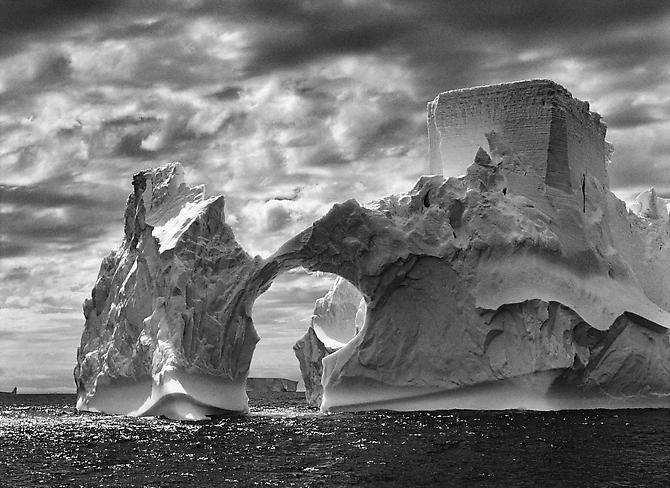
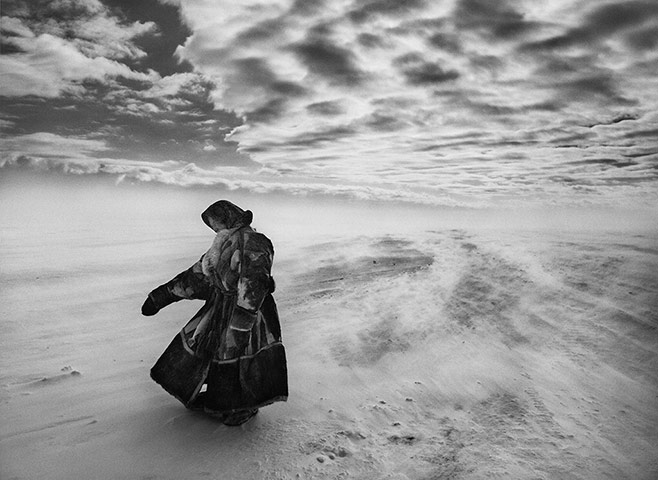
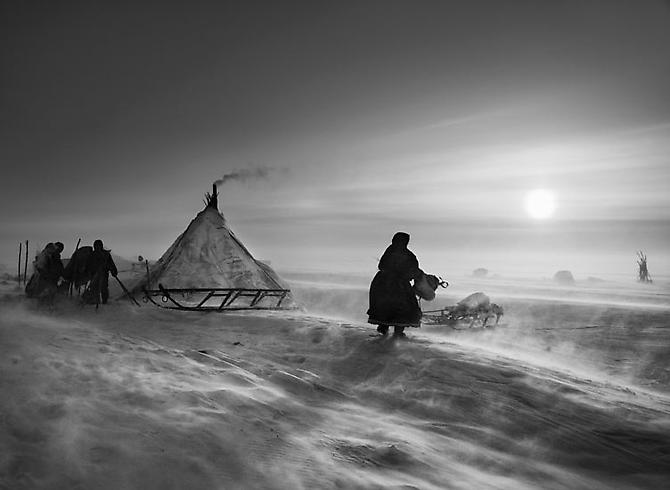
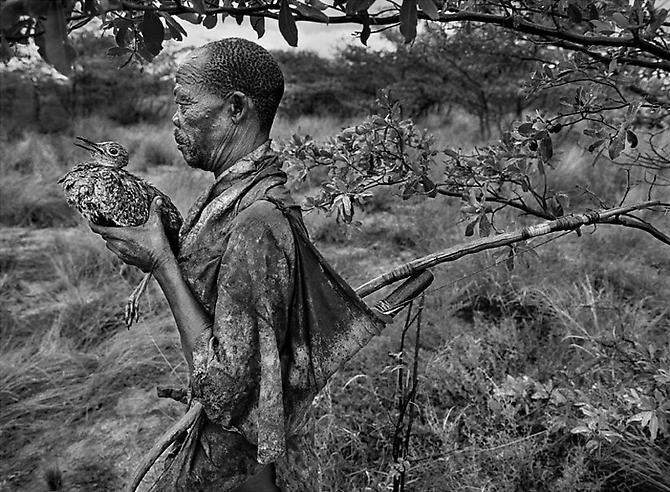
I recently went to see a gallery exhibit of Sebastião Salgado's Genesis. The gallery only included a few of the many photographs in the project, but they were pretty stunning.

Volcanoes in Kamchatka, Russia. Photo by Sebatiao Salgado
Over the space of seven years, Salgado has captured scenes of the world untouched by industrialization. The Genesis project "is about our planet earth, nature and its beauty, and what remains of it today despite the manifold destruction caused by human activity. Genesis is an attempt to portray the beauty and the majesty of regions that are still in a pristine condition, areas where landscapes and wildlife are still unspoiled, places where human communities continue to live according to their ancient culture and traditions. Genesis is about seeing and marvelling, about understanding the necessity for the protection of all this; and finally it is about inspiring action for this preservation."

I saw and I marvelled.

Easter part of the Brooks Range, Arctic National Wildlife Refuge, Alaska, USA by Sebatiao Salgado.
Iceberg between the Paulet Islands and the South Shetland Islands, Antarctica, 2005 by Sebatiao Salgado.
Eastern part of the Brooks Range, Arctic National Wildlife Refuge, 2009. By Sebatiao Salgado.
Marine Iguana, Rabida Island, Galapagos [iguana claws], 2004 by Sebatiao Salgado
Nenets nomads (windstorm), Siberia, Russia, 2011 by Sebatiao Salgado.
Nenets nomads (windstorm at camp), North of the Ob river, Siberia, Russia, 2011 by Sebatiao Salgado
I loved the photos of the Nenets, to see more go here.

Bushman carrying bird, Botswana, 2008 by Sebatiao Salgado
These are all photos I was able to see in person at the exhibit, but there are so many more. See a bunch of them on his website. He's also given a popular TED talk (Liz, I think you'll like this).

Wednesday, November 6, 2013

Miranda!

"I made this foolish mistake of going jogging. Is this something you ever do? It's wrong. No one should run unless professionally or as a child. That should be it."

-Miranda Hart
(who plays Chummy on 'Call the Midwife')

Miranda Hart isn't just Chummy, she's a comedian and the star of her own sitcom, called 'Miranda.'


Watch it on Hulu!  She also has a book called Is It Just Me? (which I hear is best in audiobook format)

Tuesday, November 5, 2013

Picture This: The Mighty Lalouche

The Mighty Lalouche by Matthew Olshan, illustrated by Sophie Blackall

In 1800s Paris, Lalouche is a postman who lives in a small view-less apartment with his finch, Genevieve. He's small and bony, but nimble, fast, and strong. Much to his chagrin, the post office fires Lalouche (because they're going to use electric autocars to deliver the mail). He doesn't know what to do until he sees an ad for boxing. Will Lalouche's speed, nimbleness, and strength be enough for him to win boxing matches against big, fearsome opponents?

I loved this book. The illustrations are a standout, but the writing is good, too. Matthew Olshan has created a lovable character--an underdog who wins, but is really just a simple postman at heart. In one fight, Olshan alludes to previous postal motifs (he was "tall as a spiral staircase, as wide as a wall of cubbies"), communicating Lalouche's love for the mail and tying two different parts of the story together in a  humorous and clever way.

Sophie Blackall's illustrations "were made with Chinese ink and watercolor on paper" that were then "cut out, arranged in layers, and photographed." They're fabulous. In the author's note, Olshan includes one of the photos of old French boxers that visibly inspired the illustrations. The characters reminded me of old-style paper dolls, and the backgrounds, of dioramas. Despite the static nature of paper dolls and cutouts, the fight sequences are action- and humor-packed. Once again, much of the delightfulness of the illustrations is in the details. I loved the scenes of Paris--a curving cobblestone street with crates of vegetables, the Sacre Coeur in the background, a row of baguettes in a window, laundry hanging. Lalouche's apartment is lovely and charming, with a tree and landscape painted on the wall, a green printed armchair (love Olshan's prints patterns throughout the book), red slippers on his feet, and a portrait of Genevieve on the wall. I smiled when I saw "defense d'afficher" painted on the wall behind the electric car. Sometimes Olshan lines an image with a hand-made border. Olshan's work here is unique and truly excellent.

All around, this is a highlight of the year.

The Mighty Lalouche

The Mighty Lalouche

The Mighty Lalouche