 |
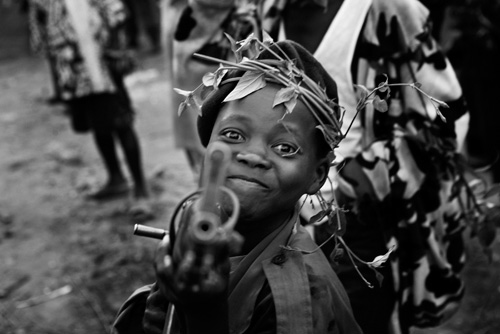
| Photo by Marcus Bleasdale, from an article in Newsweek |
I just went to the Annenberg Space for Photography's exhibit:
The Power of Photography, celebrating 125 years of National Geographic photography. This photo certainly demonstrates the power of photography. My jaw dropped when I saw it.
Marcus Bleasdale is a documentary photographer who uses his photographs to advocate for human rights. He has spent a great deal of time in Congo documenting the conflict and the mines that fund rebels. Rebel groups recruit children for their armies and their mines.
While blood diamonds have gotten a lot attention, other minerals come from conflict mines--gold, tungsten, tantalum, tin. These are the kinds of minerals used not just in jewelry, but in computers, cell phones, and other electronics. In 2010 the Dodd-Frank financial-reform bill "called for publicly listed American companies to disclose whether any of their products included minerals from mines controlled by armed groups in or around Congo." Read more (and see more photos) in
this article from National Geographic. Said Marcus about Congo:
"A report in 2004 said that more than four million people had died in what is now called Africa's first world war, and I just couldn't believe that no one was talking about this horrific death toll. That enraged me."
 |
| "A boy waits his turn for spoonfuls of rice and beans in Pluto." Photo by Marcus Bleasdale |
 |
| A child at work in a militia-run mine in Watsa. Photo by Marcus Bleasdale. |
The thing about his photos is how beautiful they can be despite the (ugly implications of the) subject matter. The photo below--I could look at it for hours. It's as if it were a carefully composed painting.
 |
| Workers rip the earth apart in search of gold. Photo by Marcus Bleasdale. |



No comments:
Post a Comment