The War That Saved My Life by Kimberly Brubaker Bradley
Ada was born with a club foot and it was never repaired. Her abusive mother keeps her locked up in their apartment, calling her a monster because of her ugly foot. When Ada’s little brother Jamie has the opportunity to be evacuated into the country to escape the bombs of an imminent World War II, Ada sneaks away with him.
They are delivered to Oxford-educated Susan and her large, clean, country house. It’s a completely different world for the children—a world with baths, new clothing (including their very first underwear), food, and green grass. And even though it’s an enormous improvement over their home, it’s unfamiliar, and they find themselves overwhelmed and homesick. Ada struggles with the effects of her cruel upbringing. Kindness and acceptance are unfamiliar to her, and sometimes her panic and fear overwhelm her. She finds solace in Susan’s pony, Butter.
Susan herself finds it difficult to care for the children, as she is suffering a deep depression after the loss of Becky, the woman she lived with and loved (the true nature of their relationship is for readers to decipher between the lines). The children do not see depression, but a woman who stays in bed all day long, sometimes mutters about not wanting or asking for children, and declares herself to be “not nice.”
Set against the backdrop of an escalating World War II, all three of them start to heal as they care for and come to love one another.
There are so many elements that I found interesting on their own, and they all came together to tell this lovely story. Living in Kent, the war touches their lives in real and oftentimes dramatic ways. The therapeutic comfort of working with horses rang true (I loved hearing things like when Ada feels a “whoosh of breath on [her] neck” ♥) Jamie also has his own challenges to overcome. I loved the authenticity of it all. Each of them finds meaning and purpose as they go beyond their insular worlds to care for one another and get involved in the war effort. Ada’s troubles are not fixed with a simple hug. She suffers long term effects from her mother’s abuse that take time and effort to overcome. And yet, Ada is as instrumental in saving Susan, as Susan is in saving her.
To top it off, this was one of those books that is wonderfully easy to read. I just opened it up and fell into it. And that was that. Before I knew it, it was over. I loved this one!
Sunday, June 21, 2015
Saturday, May 23, 2015
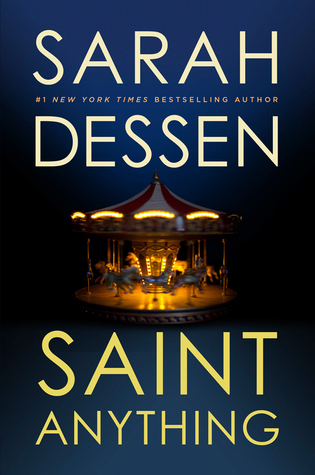
Recent Read: Saint Anything
Sydney has always lived a bit in the shadow of her charismatic older brother, Peyton. First she was overshadowed by his legend, later by his infamy. In and out of rehabs, court, and prison, Peyton became the central focus of Sydney’s family, culminating in a drunk driving accident in which a sixteen-year-old was paralyzed. Peyton is now in prison for the long term.
Sydney, in an attempt at a fresh start, transfers to the public high school where she meets Layla Chatham. Layla embraces Sydney taking her into her own group of friends and family, a place where Sydney can be herself and feel safe.
Now, this is Sarah Dessen, so you may be wondering, where’s the boy? The answer is Layla has gentle older brother (I don’t think I’m really spoiling anything here). But one of the striking things about this novel is that I wouldn't categorize it as romance. It’s more contemporary realistic, with a romance in it. The focus of this novel is Sydney herself, her family, her friends and friendships.
There’s real depth here. Sydney’s family is trying to cope with the imprisonment of their only son—and not handling it too well. Sydney is a bit invisible to them. She feels anger and resentment toward her brother. And in the absence of outward signs of her family’s guilt over the accident, Sydney takes on all of the guilt and responsibility herself. Meanwhile a friend of Peyton’s has weaseled his way into the family like a parasite, comforting Sydney’s parents, while giving Sydney an inappropriate amount of attention.
The Chathams are a safe haven, a place where her voice is heard and she is seen. The question is if she can find a way to be seen and heard by her own parents, recognized as the individual that she is.
I loved it. Highly recommended.
Saturday, May 9, 2015
Recent Read: Roller Girl
Roller Girl by Victoria Jamieson
The moment Astrid sees roller derby in action, she’s in love. All she wants to do is become a star player like Rainbow Bite. But her best friend Nicole, with whom she does just about everything, is not as enthused. Astrid finds herself embarking on her new passion alone, while Nicole spends more and more time in ballet with Astrid’s sworn enemy. As Astrid’s fear of losing her best friend takes over, she risks losing Nicole, her new roller derby friend, and her developing roller derby skills.
I loved this book. It’s a story about growing up and figuring out who your friends are and who you are, set against the exciting backdrop of roller derby. When Astrid finds out there’s a roller derby summer camp, she’s in, and she assumes her best friend is with her. Thanks to Jamieson’s deft illustrations, we can see the hesitation in Nicole’s face where Astrid does not. Astrid signs up for camp, and excitedly talks about it with Nicole, only to find that Nicole is not going to derby camp, she’s going to ballet camp.
Now she has to face derby camp all alone, while her best friend spends more and more time with perennial mean girl Rachel. From there, Astrid struggles with the physical difficulty of her would-be passion. Her worry over losing her best friend turns to a sort of vengeful jealousy. She also explores this new-found world of roller derby, with its colorful characters (and hair). I can’t believe how much emotional depth, not to mention entertainment, Jamieson packed into this 240-page book. I fully expect it to make my top 10 at the end of the year.
The moment Astrid sees roller derby in action, she’s in love. All she wants to do is become a star player like Rainbow Bite. But her best friend Nicole, with whom she does just about everything, is not as enthused. Astrid finds herself embarking on her new passion alone, while Nicole spends more and more time in ballet with Astrid’s sworn enemy. As Astrid’s fear of losing her best friend takes over, she risks losing Nicole, her new roller derby friend, and her developing roller derby skills.
I loved this book. It’s a story about growing up and figuring out who your friends are and who you are, set against the exciting backdrop of roller derby. When Astrid finds out there’s a roller derby summer camp, she’s in, and she assumes her best friend is with her. Thanks to Jamieson’s deft illustrations, we can see the hesitation in Nicole’s face where Astrid does not. Astrid signs up for camp, and excitedly talks about it with Nicole, only to find that Nicole is not going to derby camp, she’s going to ballet camp.
Now she has to face derby camp all alone, while her best friend spends more and more time with perennial mean girl Rachel. From there, Astrid struggles with the physical difficulty of her would-be passion. Her worry over losing her best friend turns to a sort of vengeful jealousy. She also explores this new-found world of roller derby, with its colorful characters (and hair). I can’t believe how much emotional depth, not to mention entertainment, Jamieson packed into this 240-page book. I fully expect it to make my top 10 at the end of the year.
Wednesday, April 15, 2015
Picture This: Tricky Vic
Tricky Vic: The Impossibly True Story of the Man Who Sold the Eiffel Tower by Greg Pizzoli
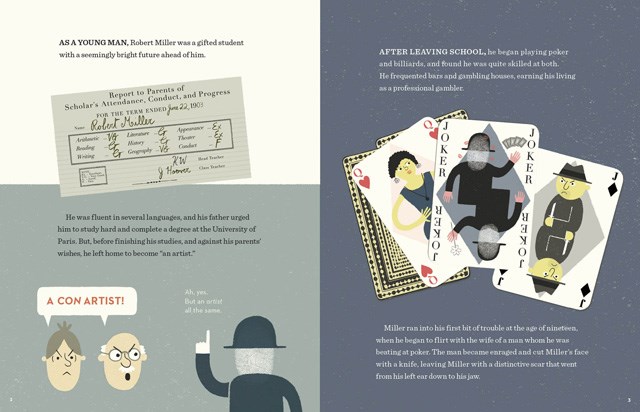
“In 1890, the man who would one day be known by forty-five different aliases was born to the Miller family, in what is now the Czech Republic. His parents named him Robert.”
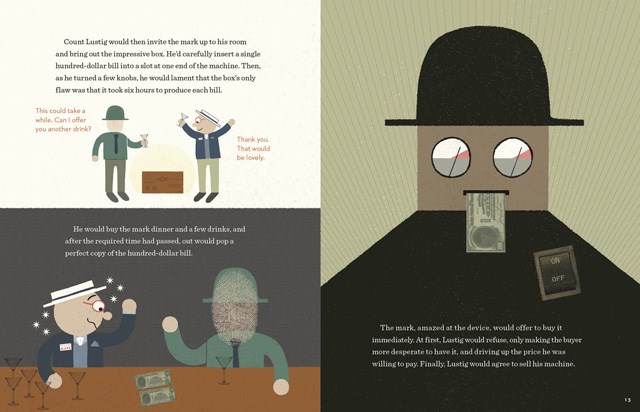
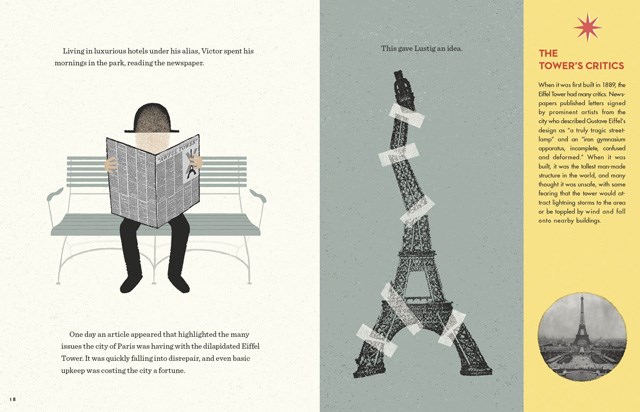
So begins the tale of ultimate con man Tricky Vic (often known as Count Victor Lustig). He was a good student, but before finishing his studies at the University of Paris, he left to pursue a life of deception. His exploits include posing as a count in order to cozy up to rich ocean liner passengers and rob them at the dock, conning Al Capone into thinking he was an honest man, convincing men to buy his money making machine, and, of course, selling a contract for the rights to the Eiffel Tower and its scrap metal. This is a fascinating tale about a liar for the ages.
I think one of the many things that sets this book apart is that it’s a biography for children about a bad guy. No didacticism or heroism to be found, just one unbelievable tale after another, always interesting. Pizzoli’s design-heavy, graphic mixed media illustrations complement the story. He cleverly represents Tricky Vic’s face as a fingerprint, and draws on archival photographs and newspaper articles, as well as his own photographs to create textures and shapes. If you look at this post on him and this book at Seven Impossible Things Before Breakfast you can see all the wonderful details he put into the book, some of them almost like secret references to Paris. (that texture? Comes from the floor of the Eiffel tower) He includes the occasional sidebar explaining such things as prohibition, this particular part of the Eiffel Tower’s history, and counterfeiting to provide a little more context and historical background for young readers. Very well done all around.
“In 1890, the man who would one day be known by forty-five different aliases was born to the Miller family, in what is now the Czech Republic. His parents named him Robert.”
So begins the tale of ultimate con man Tricky Vic (often known as Count Victor Lustig). He was a good student, but before finishing his studies at the University of Paris, he left to pursue a life of deception. His exploits include posing as a count in order to cozy up to rich ocean liner passengers and rob them at the dock, conning Al Capone into thinking he was an honest man, convincing men to buy his money making machine, and, of course, selling a contract for the rights to the Eiffel Tower and its scrap metal. This is a fascinating tale about a liar for the ages.
I think one of the many things that sets this book apart is that it’s a biography for children about a bad guy. No didacticism or heroism to be found, just one unbelievable tale after another, always interesting. Pizzoli’s design-heavy, graphic mixed media illustrations complement the story. He cleverly represents Tricky Vic’s face as a fingerprint, and draws on archival photographs and newspaper articles, as well as his own photographs to create textures and shapes. If you look at this post on him and this book at Seven Impossible Things Before Breakfast you can see all the wonderful details he put into the book, some of them almost like secret references to Paris. (that texture? Comes from the floor of the Eiffel tower) He includes the occasional sidebar explaining such things as prohibition, this particular part of the Eiffel Tower’s history, and counterfeiting to provide a little more context and historical background for young readers. Very well done all around.
Picture This: The Crocodile Who Didn't Like Water
The Crocodile Who Didn't Like Water by Gemma Marino
"Once upon a time, there was a little crocodile. And this little crocodile didn't like water."
Indeed he looks on wistfully as his brothers and sisters play in the bathtub, in the lake and in the pool. He buys an inner tube (swim ring in the book b/c it's British) with saved tooth fairy money, bound and determined to swim and have fun with the others. But it doesn't work out. He definitely hates water.
Such a fun story. When little crocodile sneezes out fire, he and everyone else realize something--he's not a crocodile. Little dragon, once he figures out who he is, is much happier and can share his gifts with his crocodile siblings. When I read the story a second time, I noticed all sorts of things I didn’t notice before (indicators of little dragon’s true identity). Even the endpapers tell a part of the story. I loved Marino’s illustrations—the style, textures, and expressiveness of her little reptiles. This one is a winner!
"Once upon a time, there was a little crocodile. And this little crocodile didn't like water."
Indeed he looks on wistfully as his brothers and sisters play in the bathtub, in the lake and in the pool. He buys an inner tube (swim ring in the book b/c it's British) with saved tooth fairy money, bound and determined to swim and have fun with the others. But it doesn't work out. He definitely hates water.
Such a fun story. When little crocodile sneezes out fire, he and everyone else realize something--he's not a crocodile. Little dragon, once he figures out who he is, is much happier and can share his gifts with his crocodile siblings. When I read the story a second time, I noticed all sorts of things I didn’t notice before (indicators of little dragon’s true identity). Even the endpapers tell a part of the story. I loved Marino’s illustrations—the style, textures, and expressiveness of her little reptiles. This one is a winner!
Monday, March 30, 2015
Recent Read: It's What I Do
It's What I Do by Lynsey Addario
Lynsey Addario is perhaps most famous to the general public for being kidnapped and held by the Libyan government for five days days in 2011. Hopefully that will change with the publication of this book, because what she should be better known for is her breathtaking photography, and now, her stunning memoir.
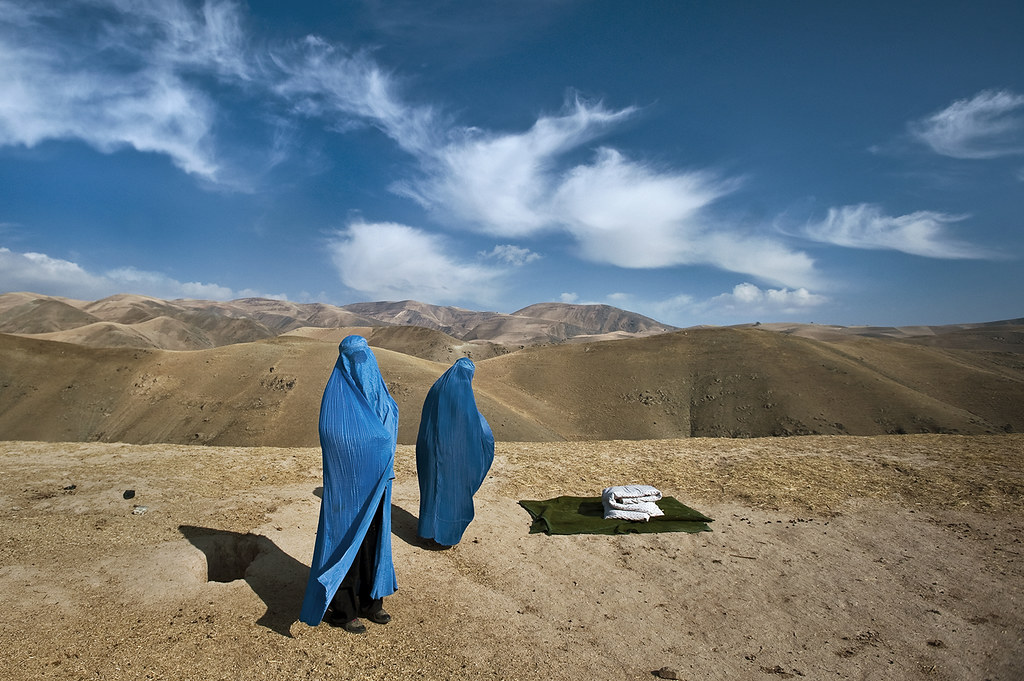
Addario got into the business of breaking news photography in her mid-twenties. She moved abroad, even did a story about women in Afghanistan in 2000 that no publication was interested in buying. Imagine that.
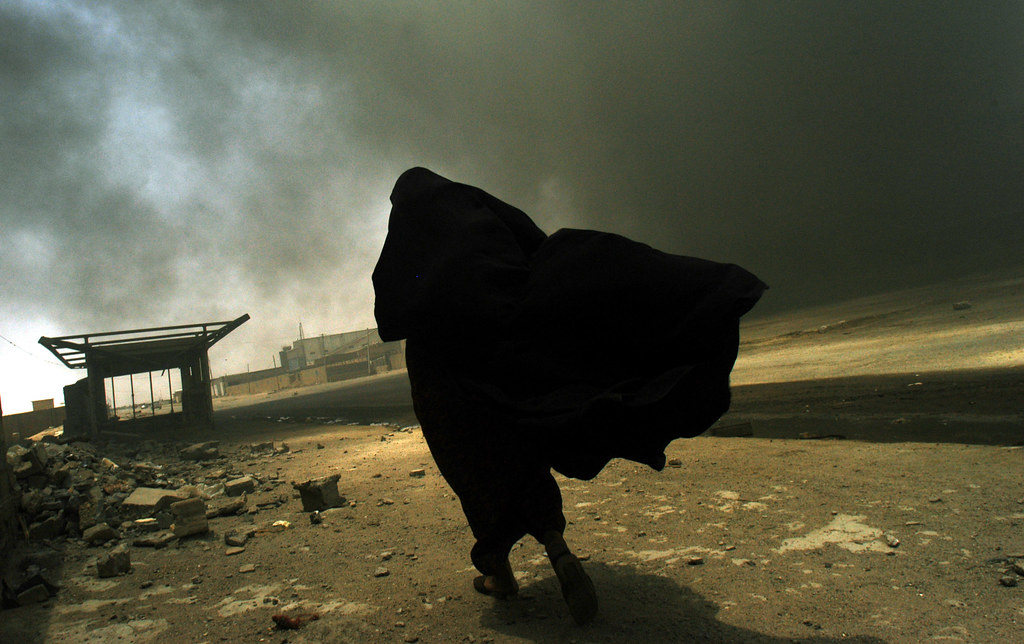
After 9/11 and the start of the war, she entered (and fell in love with) the world of conflict photography. Over the years she covered conflicts in Afghanistan, Iraq, Congo, and Darfur, to name a few. She is the recipient of a Pulitzer, a Getty Images grant, and a MacArthur Fellowship. But all you need is to see are a few of her gorgeous photographs to know she is the real deal.
It’s What I Do takes us inside her world, introducing us to her roots, and bringing us through the most important parts of her career and personal life--those times that shaped her as a person and as a photographer. Every single page is fascinating.
I love this book for so many reasons:
Lynsey, you are so cool. I wish I could be friends with you.
Lynsey Addario is perhaps most famous to the general public for being kidnapped and held by the Libyan government for five days days in 2011. Hopefully that will change with the publication of this book, because what she should be better known for is her breathtaking photography, and now, her stunning memoir.
Addario got into the business of breaking news photography in her mid-twenties. She moved abroad, even did a story about women in Afghanistan in 2000 that no publication was interested in buying. Imagine that.
After 9/11 and the start of the war, she entered (and fell in love with) the world of conflict photography. Over the years she covered conflicts in Afghanistan, Iraq, Congo, and Darfur, to name a few. She is the recipient of a Pulitzer, a Getty Images grant, and a MacArthur Fellowship. But all you need is to see are a few of her gorgeous photographs to know she is the real deal.
It’s What I Do takes us inside her world, introducing us to her roots, and bringing us through the most important parts of her career and personal life--those times that shaped her as a person and as a photographer. Every single page is fascinating.
I love this book for so many reasons:
- The photography. Lynsey Addario is has produced some of the most stunning photographs I’ve ever seen. She is a true artist.
- The adventure. Addario hasn’t lived in the US in 15 years. She's seemingly always on the go--from one remote location to another. She sees so much of the world, becomes familiar with the people and the cultures in ways most of us can only dream about. For her to invite us to see and learn about these places and people with her is a gift.
- The human side. At the heart of all of it are the stories of individual people. That’s what much of her work is about. She sees the human cost in these conflicts, sometimes at the hands of evil men and regimes, other times an unintentional price of a war. Take, for example, this piece that was just published in the New York Times about an emergency women's shelter in Afghanistan where women can seek refuge from honor killings.
- The power of photography. She knows (as do some of her subjects) that by taking photographs and taking them home, she can get aid to those in need. It’s given me a newfound respect for photojournalists and journalists at this level—their passion, their genuine concern for other people, the risks they take to bring scenes home to us that we would be ignorant of otherwise.
- Her presentation. Her writing is excellent. But perhaps, more important, her story is honest. She has a way of presenting the events of her life in a way that is personal and yet fair. Though she feels compelled to do her work as a way of drawing attention to causes and informing the American public, she never pushes an agenda. She acknowledges and describes the limitations (both real and imagined) of being a woman in her field, without ever sounding like a feminist activist. She intimates her own personal realizations and feelings, but largely, she lets her experiences speak for themselves, and that is more than sufficient
- Love. Addario’s own personal story of family and love is as compelling as the rest. It’s very difficult for her to sustain relationships with all her comings and goings. Her passion and drive is something no partner seems to fully understand. She expects to stay single and never have children, and yet, she meets a man who understands her photojournalist side, her need to constantly be on the go, and he accepts and loves her as she is. I don’t think I’m spoiling anything by saying they have a child, and her descriptions of new motherhood are beautiful, as well. (Plus, there is the most gorgeous baby photo I HAVE EVER SEEN.)
- Perspective. There is definitely something about seeing and hearing (and for Lynsey, witnessing first-hand) how other people (especially women) live in other places around the world to put your own life in perspective. One of my favorite quotes in the book: “The women ... put my life of privilege, opportunity, independence, and freedom into perspective. As an American woman, I was spoiled: to work, to make decisions, to be independent, to have relationships with men, to feel sexy, to fall in love, to fall out of love, to travel. I was only twenty-six, and I had already enjoyed a lifetime of new experiences.” Have you ever thought how lucky you are just to be able to make a decision? Wow.
- Gripping. I did not want to put this book down. Plus, it had a similar effect on me as Into Thin Air: I felt warned off her profession, while also wishing I could get out there and do what she does.
Wednesday, March 4, 2015
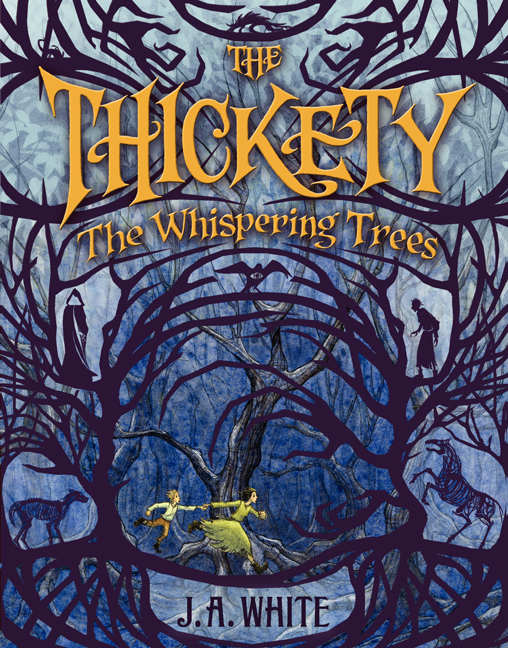
Recent Read: The Thickety: The Whispering Trees
I want to review the excellent second novel in the Thickety series, but I don’t want to spoil anything that happens in Book 1, which is a nearly impossible task. This is one of the best and most exciting new children’s fantasy series. So if you haven't, go out and get The Thickety: A Path Begins.
In The Thickety: The Whispering Trees, Kara and her little brother Taff are alone in the darkness of the Thickety, and Sordyr, the evil forest demon, is after them. They have no choice but to trust Mary Kettle, a witch infamous for the ease with which she traded children’s lives for her own magical gain. The only way out, Mary tells them, is to get past Imogen, once a girl, now more of a monster. (And I'll leave it at that, so as not to give away much of this or the last book.)
White maintains the momentum and excitement of the first book throughout the second. This one is a little more like a quest. Kara faces different challenges as she learns to use her gifts and navigate the morality of this magical world. I was constantly amazed by White’s creativity—the creatures (and magic and evils) he invents are oftentimes beyond my wildest imaginings. Once again, White concludes this portion of the story, while still opening a door to the next chapter in what will be a four-book series. I can't wait for the rest!
In The Thickety: The Whispering Trees, Kara and her little brother Taff are alone in the darkness of the Thickety, and Sordyr, the evil forest demon, is after them. They have no choice but to trust Mary Kettle, a witch infamous for the ease with which she traded children’s lives for her own magical gain. The only way out, Mary tells them, is to get past Imogen, once a girl, now more of a monster. (And I'll leave it at that, so as not to give away much of this or the last book.)
White maintains the momentum and excitement of the first book throughout the second. This one is a little more like a quest. Kara faces different challenges as she learns to use her gifts and navigate the morality of this magical world. I was constantly amazed by White’s creativity—the creatures (and magic and evils) he invents are oftentimes beyond my wildest imaginings. Once again, White concludes this portion of the story, while still opening a door to the next chapter in what will be a four-book series. I can't wait for the rest!
Subscribe to:
Posts (Atom)