Each page is a comic featuring Benjamin Bear and his ideas and logic. The comics are low on words, big on critical thinking. How does Benjamin Bear find his way out of a maze? His fruit rots, and he follows the trail of ants. When a sheep complains to Benjamin Bear that he's hot, Benjamin shears the sheep's coat, but then he says he's cold! What does Benjamin Bear do? He knits the sheep a sweater out of the wool. I love these! They're funny and clever, and they require the reader to think. Fuzzy Thinking was nominated for the Eisner Award and has won many prizes in France. Coudray has published many more l'Ours Barnabé books in France, so I hope that means there will be many Benjamin Bear Books to come.
Friday, July 26, 2013
Independent Reading: Benjamin Bear
Each page is a comic featuring Benjamin Bear and his ideas and logic. The comics are low on words, big on critical thinking. How does Benjamin Bear find his way out of a maze? His fruit rots, and he follows the trail of ants. When a sheep complains to Benjamin Bear that he's hot, Benjamin shears the sheep's coat, but then he says he's cold! What does Benjamin Bear do? He knits the sheep a sweater out of the wool. I love these! They're funny and clever, and they require the reader to think. Fuzzy Thinking was nominated for the Eisner Award and has won many prizes in France. Coudray has published many more l'Ours Barnabé books in France, so I hope that means there will be many Benjamin Bear Books to come.
Monday, July 22, 2013
Some time with family
Last weekend I was able to get out of the city spend some time with a portion of my very large extended family in Southeast Washington.
Words cannot express what good that weekend did for me.
For one, there's the location. Southeast Washington is not a lush forest. It's the opposite--dry and dusty with rolling hills, specifically Horse Heaven Hills. On the one side is the green, irrigated valley of vineyards, orchards, and other farms. On the other side are wheat fields, golden and rustling in the breeze. Exploring this landscape is one of the highlights of each trip.
As I've gotten older, I've really come to appreciate getting away from the city.
But the best part of the trip is the people. My grandmother had 9 children, many of whom have large families of their own. I spent many summers coming up here to visit my grandma and play with my cousins. We spent the weekend sitting outdoors in the shade chatting and playing games--sometimes late into the night. (I got a few photographs of my cousins' children that are absolute gems, but I feel funny posting them on the web, so you'll just have to take my word for it.)
I treasure the relationships I have with my extended family. They're all such wonderful people. And I feel like I have my grandparents to thank.
Words cannot express what good that weekend did for me.
For one, there's the location. Southeast Washington is not a lush forest. It's the opposite--dry and dusty with rolling hills, specifically Horse Heaven Hills. On the one side is the green, irrigated valley of vineyards, orchards, and other farms. On the other side are wheat fields, golden and rustling in the breeze. Exploring this landscape is one of the highlights of each trip.
As I've gotten older, I've really come to appreciate getting away from the city.
But the best part of the trip is the people. My grandmother had 9 children, many of whom have large families of their own. I spent many summers coming up here to visit my grandma and play with my cousins. We spent the weekend sitting outdoors in the shade chatting and playing games--sometimes late into the night. (I got a few photographs of my cousins' children that are absolute gems, but I feel funny posting them on the web, so you'll just have to take my word for it.)
I treasure the relationships I have with my extended family. They're all such wonderful people. And I feel like I have my grandparents to thank.
Wednesday, July 10, 2013
Maddie on Things: A Super Serious Project about Dogs and Physics
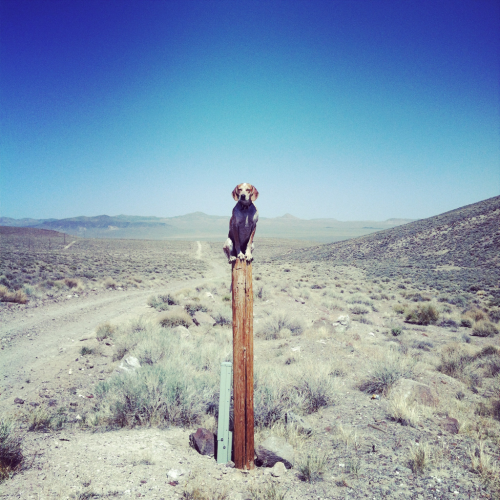
Have you heard of the blog, Maddie on Things/Maddie the Coonhound?
Photographer Theron Humphrey decided to leave his job to travel across the country, finding one person each day of the year to photograph and interview, thus recording the stories of regular American folks. He figured he needed a dog to keep him company, and so he rescued Maddie from an animal shelter before setting out. Of course, it's the beautiful heavy-lidded dog who could balance precariously on objects that stole the show.
Together they spent 365 days on the road, traveling 65,000 miles.
Of course, the other (meaning not "on things") photographs of Maddie are wonderful, too.
This year, Maddie on Things: A Super Serious Project about Dogs and Physics was published. Theron Humphrey and Maddie are now on tour. You can check out Maddie on Things and his other projects, This Wild Idea and Why We Rescue on his website. (To be perfectly honest, the website is better than the book, but either way, I love the photos)
Photographer Theron Humphrey decided to leave his job to travel across the country, finding one person each day of the year to photograph and interview, thus recording the stories of regular American folks. He figured he needed a dog to keep him company, and so he rescued Maddie from an animal shelter before setting out. Of course, it's the beautiful heavy-lidded dog who could balance precariously on objects that stole the show.
Together they spent 365 days on the road, traveling 65,000 miles.
Of course, the other (meaning not "on things") photographs of Maddie are wonderful, too.
This year, Maddie on Things: A Super Serious Project about Dogs and Physics was published. Theron Humphrey and Maddie are now on tour. You can check out Maddie on Things and his other projects, This Wild Idea and Why We Rescue on his website. (To be perfectly honest, the website is better than the book, but either way, I love the photos)
Friday, June 28, 2013
Recent Recommendations: June 2013
It's been so long! I'm not sure why.
Escher Sketch
Franz Ferdinand's New Song!!! "Right Action"
Tattoos inspired by books Some of these I thought were odd choices, some surprised me, and some were pretty cool.
Can't get enough of "All Your Gold" by Bat for Lashes
The Intouchables A hilarious, heart-warming French film about a paralyzed man and the thug-like guy who becomes his caretaker. The acting was excellent, and debut actor, Omar Sy won the French Oscar for his immensely appealing performance. It was hugely popular in France, and it exceeded my high expectations. Watch the trailer. I dare you not to want to watch it.
Pierre Carreau's photos of waves frozen by a very high speed camera. They look like sculptures. Very cool. (via)
"Royals" by 16-year-old Kiwi, Lorde (also, "Tennis Court")
Glastonbury 2013 (June 26-30, so hopefully new videos will continue to be posted throughout the weekend)
Don't miss the trailer for the Michael J. Fox Show, coming this spring.
This video of a sheep rescue gone wrong:
And your adorable for the day:
(see his first visit to the show)
Escher Sketch
Franz Ferdinand's New Song!!! "Right Action"
Tattoos inspired by books Some of these I thought were odd choices, some surprised me, and some were pretty cool.
Can't get enough of "All Your Gold" by Bat for Lashes
The Intouchables A hilarious, heart-warming French film about a paralyzed man and the thug-like guy who becomes his caretaker. The acting was excellent, and debut actor, Omar Sy won the French Oscar for his immensely appealing performance. It was hugely popular in France, and it exceeded my high expectations. Watch the trailer. I dare you not to want to watch it.
Pierre Carreau's photos of waves frozen by a very high speed camera. They look like sculptures. Very cool. (via)
"Royals" by 16-year-old Kiwi, Lorde (also, "Tennis Court")
Glastonbury 2013 (June 26-30, so hopefully new videos will continue to be posted throughout the weekend)
Don't miss the trailer for the Michael J. Fox Show, coming this spring.
This video of a sheep rescue gone wrong:
And your adorable for the day:
(see his first visit to the show)
Tuesday, June 25, 2013
Picture This: Take Me Out to the Yakyu
Take Me Out to the Yakyu by Aaron Meshon
"I love baseball," our young, rosy-cheeked narrator says, "in America...and in Japan." He then explains what it's like to go to the baseball game (or yakyu) with his Pop Pop and with Ji Ji. The reader sees and hears about the rituals and differences of going to a baseball game in America and in Japan. In America, he gets a hot dog and peanuts, while in Japan he gets soba noodles and edamame. Though the transportation, venue, souvenirs, and vocabulary may be different, the spirit is the same in this fond ode to baseball.
The more I look over this book, the more I appreciate it. It's one of those deceptively simple books. The text is simple and direct (easy-reader like). But not everything that's featured in the illustrations is explicitly explained in the text. Readers have room to explore and discover on their own. They can see the differences (and similarities) in architecture, furniture, toys, etc. Embedded throughout the book are cultural differences and similarities in addition to the more superficial differences, like using kilometers instead of miles. The Americans have paper tickets, while the Japanese have a phone with a scannable QR code on it; the Americans cheer, "win!" while the Japanese shout, "do your best!"
The illustrations are bright, bold, eye-catching, and graphic (is that enough adjectives for you?). In mirrored images, Meshon shows America in blue (on the right) and Japan in Red (on the left). Sometimes the facing pages interact in dynamic ways. The illustrations conjure the excitement of the game, and feature the quintessential experiences of going to a game.
Meshon has sprinkled Japanese words throughout, and includes a glossary at the end. I do wish he'd included a pronunciation guide (how do you say kakiiin?) but that's a minor quibble. He has also written an author's note in which he explains a little about the game itself and its history, once again comparing the game in America and Japan.
This is obviously a book for baseball lovers by a baseball lover. Great fun.
"I love baseball," our young, rosy-cheeked narrator says, "in America...and in Japan." He then explains what it's like to go to the baseball game (or yakyu) with his Pop Pop and with Ji Ji. The reader sees and hears about the rituals and differences of going to a baseball game in America and in Japan. In America, he gets a hot dog and peanuts, while in Japan he gets soba noodles and edamame. Though the transportation, venue, souvenirs, and vocabulary may be different, the spirit is the same in this fond ode to baseball.
The more I look over this book, the more I appreciate it. It's one of those deceptively simple books. The text is simple and direct (easy-reader like). But not everything that's featured in the illustrations is explicitly explained in the text. Readers have room to explore and discover on their own. They can see the differences (and similarities) in architecture, furniture, toys, etc. Embedded throughout the book are cultural differences and similarities in addition to the more superficial differences, like using kilometers instead of miles. The Americans have paper tickets, while the Japanese have a phone with a scannable QR code on it; the Americans cheer, "win!" while the Japanese shout, "do your best!"
The illustrations are bright, bold, eye-catching, and graphic (is that enough adjectives for you?). In mirrored images, Meshon shows America in blue (on the right) and Japan in Red (on the left). Sometimes the facing pages interact in dynamic ways. The illustrations conjure the excitement of the game, and feature the quintessential experiences of going to a game.
Meshon has sprinkled Japanese words throughout, and includes a glossary at the end. I do wish he'd included a pronunciation guide (how do you say kakiiin?) but that's a minor quibble. He has also written an author's note in which he explains a little about the game itself and its history, once again comparing the game in America and Japan.
This is obviously a book for baseball lovers by a baseball lover. Great fun.
Wednesday, June 19, 2013
Recent Read: Eleanor & Park
"She looked like art, and art wasn't supposed to look nice; it was supposed to make you feel something"
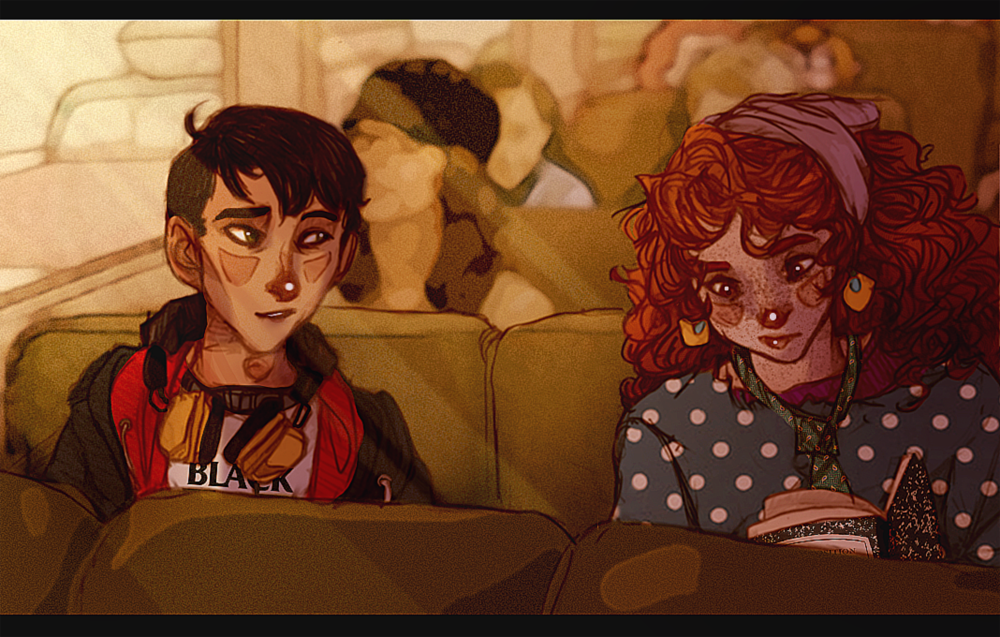
After being kicked out of the house for a year by her new step-father, Eleanor's back and starting at a new high school. She walks onto the bus, chubby, with bright, wild red hair, and weird clothes. No one wants her to sit by them. But when the bus driver insists she sit down, an Asian kid named Park reluctantly moves his bag so she can sit. Eleanor and Park ride the bus together in silence every day. But when he notices her reading his X-Men comics over his shoulder, he slows down his page turns. He doesn't want to be associated with the new girl, and she thinks of him as "weird Asian kid." When he gets vol. 1 of Watchmen, he invites her to take it home and finish it. Shocked, she does and loves every moment. A few days later she arrives on the bus to find a whole stack of comics waiting for her on her seat, to take home, read, and bring back.
Have I caught your attention? Because this had to be one of the most romantic beginnings to a story I’d ever read. When he sees that she’s written the titles of Smiths songs on her book covers and learns she's never heard them, he makes a mix tape. When he finds out she doesn’t have anything to listen to it on, he gives her his walkman.
What Park doesn't know is what a dreadful, scary place Eleanor's home is. She’s so poor, she doesn't have a toothbrush, and her mother married the physically, verbally, and emotionally abusive drunk who kicked Eleanor out of the house for a year. So the bus rides and the music and the comics become her solace. She spends every waking moment away from Park thinking about him, anticipating the next time she’ll see him. And even though he comes from a happy home with loving parents, he feels the same way about her, wishing he could always be with her.
Even though Eleanor & Park by Rainbow Rowell is another love story b/w teenagers in high school, nothing about this story feels like something I’ve seen before. The excellent writing and character development elevate this above so much of what's out there, while still maintaining a good story with heart and excitement. Everything about this story felt real--her mother’s relationship with this abusive creep, Park’s father's difficulty in connecting with his sensitive son, Eleanor’s discomfort being in a traditional home like Park’s, her shame and unwillingness to open up, Park’s feminine mother not knowing how to make sense of this odd red-headed girl, I could go on. All of these various themes and everyday life struggles give the story some real meat and depth.
And the romance--it puts Twilight to shame! The love is so intense and passionate. There are lines like, "Eleanor sitting next to him on the couch made Park feel like someone had opened a window in the middle of the room. Like someone had replaced all the air in the room with brand-new, improved air (now with twice the freshness)." Yeah.
I would recommend this to John Green fans (he did give it a stellar review).
After being kicked out of the house for a year by her new step-father, Eleanor's back and starting at a new high school. She walks onto the bus, chubby, with bright, wild red hair, and weird clothes. No one wants her to sit by them. But when the bus driver insists she sit down, an Asian kid named Park reluctantly moves his bag so she can sit. Eleanor and Park ride the bus together in silence every day. But when he notices her reading his X-Men comics over his shoulder, he slows down his page turns. He doesn't want to be associated with the new girl, and she thinks of him as "weird Asian kid." When he gets vol. 1 of Watchmen, he invites her to take it home and finish it. Shocked, she does and loves every moment. A few days later she arrives on the bus to find a whole stack of comics waiting for her on her seat, to take home, read, and bring back.
Have I caught your attention? Because this had to be one of the most romantic beginnings to a story I’d ever read. When he sees that she’s written the titles of Smiths songs on her book covers and learns she's never heard them, he makes a mix tape. When he finds out she doesn’t have anything to listen to it on, he gives her his walkman.
| Fan art by Henna Lucas http://pbjsandwitch.tumblr.com/ |
What Park doesn't know is what a dreadful, scary place Eleanor's home is. She’s so poor, she doesn't have a toothbrush, and her mother married the physically, verbally, and emotionally abusive drunk who kicked Eleanor out of the house for a year. So the bus rides and the music and the comics become her solace. She spends every waking moment away from Park thinking about him, anticipating the next time she’ll see him. And even though he comes from a happy home with loving parents, he feels the same way about her, wishing he could always be with her.
Even though Eleanor & Park by Rainbow Rowell is another love story b/w teenagers in high school, nothing about this story feels like something I’ve seen before. The excellent writing and character development elevate this above so much of what's out there, while still maintaining a good story with heart and excitement. Everything about this story felt real--her mother’s relationship with this abusive creep, Park’s father's difficulty in connecting with his sensitive son, Eleanor’s discomfort being in a traditional home like Park’s, her shame and unwillingness to open up, Park’s feminine mother not knowing how to make sense of this odd red-headed girl, I could go on. All of these various themes and everyday life struggles give the story some real meat and depth.
And the romance--it puts Twilight to shame! The love is so intense and passionate. There are lines like, "Eleanor sitting next to him on the couch made Park feel like someone had opened a window in the middle of the room. Like someone had replaced all the air in the room with brand-new, improved air (now with twice the freshness)." Yeah.
I would recommend this to John Green fans (he did give it a stellar review).
Thursday, June 13, 2013
Picture This: The Matchbox Diary
The Matchbox Diary by Paul Fleischman, illustrated by Bagram Ibatoulline
On a visit to her great-grandfather's house, a little girl picks out an old cigar box so she can listen to him tell her its story. He opens the box to reveal many matchboxes. He explains that it's his diary. In each box is a token of a past memory. In the first is an olive pit he sucked on when he was a hungry boy in Italy. In another is the first bottle cap he ever saw, collected on his journey to Naples. Together great-grandfather and great-granddaughter revisit his past and his journey from Italy to America.
The story is a familiar one--a great-grandparent travels from his country to America to find a better life. Though its difficult, he lives out his own American dream. But I don't know that it's a story that gets old--especially not with a telling like this. Fleischman has obviously chosen the objects and memories with care, then telling the story in a straightforward manner, through dialogue. The grandfather sucked on an olive pit because there was no food in his home. To communicate, his father had to find someone to write letters for him, and then his wife in Italy had to get the schoolmaster's son to read them aloud because the entire family was illiterate (hence the diary kept with objects instead of words).
Bagram Ibatoulline's expressive illustrations evoke nostalgia. The pages are textured and colored like old, fragile paper, and the images of past memories are done in a sepia color palette, like old photographs you might see at the Ellis Island Immigration museum. The current conversation between grandfather and granddaughter is in saturated color, distinguishing it from memory. The softness of Ibatoulline's illustrations also lends itself to the nostalgic feel as many of the illustrated memories have a dream-like quality to them.
I think children would love the idea of a diary of objects. I can see application in homes and classrooms--invitations for children to create their own diaries with collected objects.
On a visit to her great-grandfather's house, a little girl picks out an old cigar box so she can listen to him tell her its story. He opens the box to reveal many matchboxes. He explains that it's his diary. In each box is a token of a past memory. In the first is an olive pit he sucked on when he was a hungry boy in Italy. In another is the first bottle cap he ever saw, collected on his journey to Naples. Together great-grandfather and great-granddaughter revisit his past and his journey from Italy to America.
The story is a familiar one--a great-grandparent travels from his country to America to find a better life. Though its difficult, he lives out his own American dream. But I don't know that it's a story that gets old--especially not with a telling like this. Fleischman has obviously chosen the objects and memories with care, then telling the story in a straightforward manner, through dialogue. The grandfather sucked on an olive pit because there was no food in his home. To communicate, his father had to find someone to write letters for him, and then his wife in Italy had to get the schoolmaster's son to read them aloud because the entire family was illiterate (hence the diary kept with objects instead of words).
Bagram Ibatoulline's expressive illustrations evoke nostalgia. The pages are textured and colored like old, fragile paper, and the images of past memories are done in a sepia color palette, like old photographs you might see at the Ellis Island Immigration museum. The current conversation between grandfather and granddaughter is in saturated color, distinguishing it from memory. The softness of Ibatoulline's illustrations also lends itself to the nostalgic feel as many of the illustrated memories have a dream-like quality to them.
I think children would love the idea of a diary of objects. I can see application in homes and classrooms--invitations for children to create their own diaries with collected objects.
Subscribe to:
Posts (Atom)